Location
atop Red Hill, Lhasa, Tibet
The Potala on Red Hill, at 3,700 meters, was f...
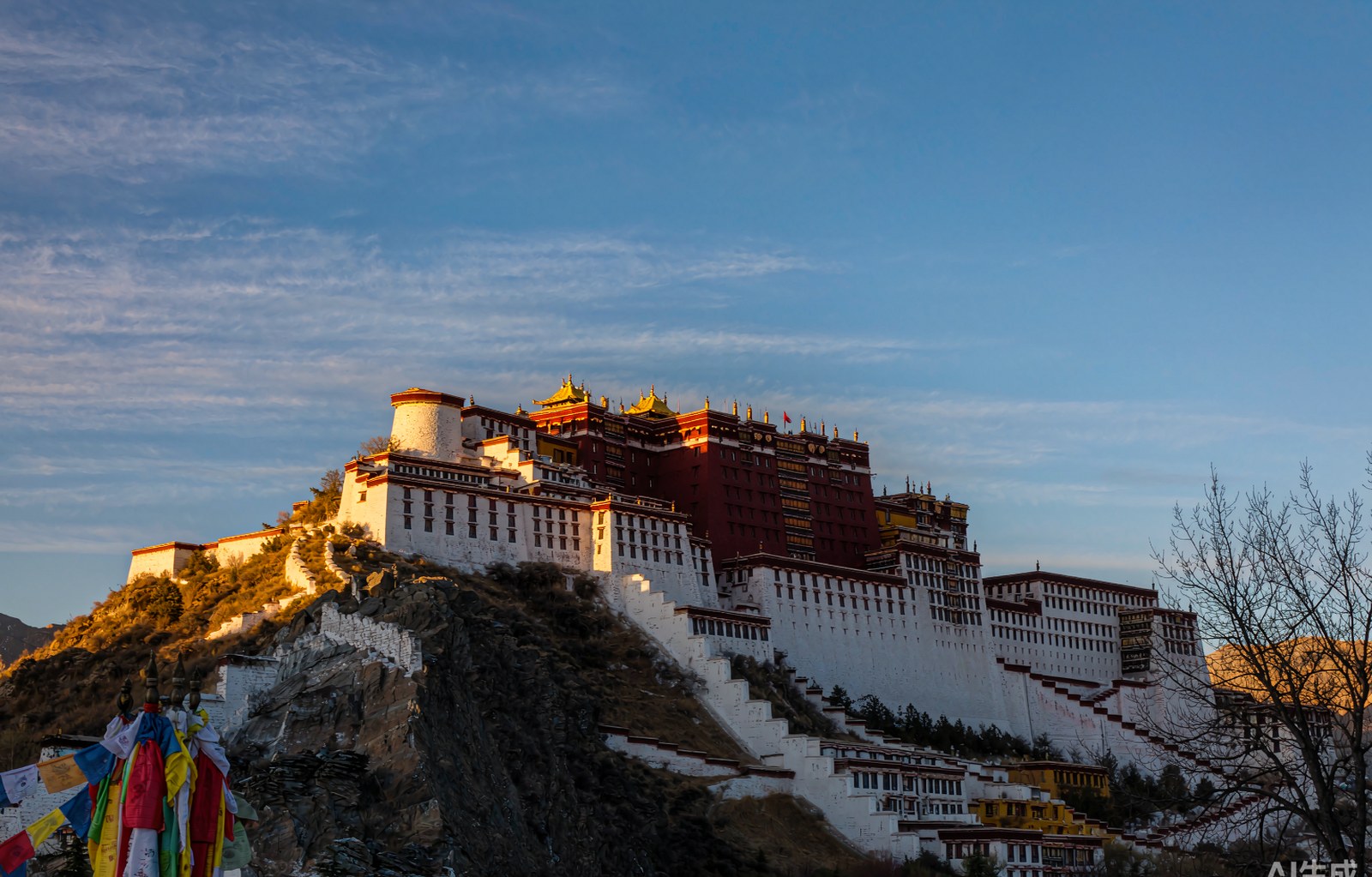
The Potala on Red Hill, at 3,700 meters, was first built in 631 under Songtsen Gampo; rebuilt in the seventeenth century by the Fifth Dalai Lama, it became the winter palace of the successive Dalai Lamas. Thirteen stories and 117 meters of height stacked up the mountainside, the White Palace and the Red Palace solemn in the sun — the highest ancient palace-fortress complex in the world, the spiritual landmark of the snow plateau.
"Potala" is the Sanskrit "Potalaka" — the seat of Avalokiteshvara. The whole palace climbs from the foot of the hill to the ridge, the walls battered inward, the foundations rooted in living rock; walls framed with pengma grass (tamarisk twigs) lighten the structure, and a thousand years have not felled it. The White Palace housed the Dalai Lamas' residence and government; the Red Palace holds the chapels and funerary stupas — the Fifth Dalai Lama's stupa, made of 3,721 kilograms of gold and tens of thousands of gems, is the grandest in the palace.
More than 2,500 square meters of murals: Songtsen Gampo welcoming Princess Wencheng, the Fifth Dalai Lama's audience with the Shunzhi Emperor. Nearly ten thousand thangkas, palm-leaf scriptures and the Kangyur written in gold and silver ink are the palace's treasures. The golden roofs combine Chinese hip-gable and Tibetan flat-roof forms, and the arga-earth rooftops, beaten countless times, shine like mirrors — Chinese and Tibetan craftsmanship fused into one.
山顶佛宫金顶明,日光城中转经声。 — "On the hilltop the Buddha-palace's golden roofs shine; in the City of Sunlight sound the prayer wheels."—— Modern verse on the Potala
In 1961 the Potala was listed among the first group of Major Historical and Cultural Sites Protected at the National Level; in 1994 it became a World Heritage site. Two restoration campaigns, in 1989 and 2002, spent more than 300 million yuan, following Tibetan craft traditions of "restoring the old as old." Today pilgrims circle the palace's Zikor path day and night, prayer wheels turning without pause — the palace is at once a monument and a living space of faith.