Location
junction of Luding, Kangding and Jiulong, Ganzi, Sichuan
Gongga — "white ice mountain" in Tibetan — sta...
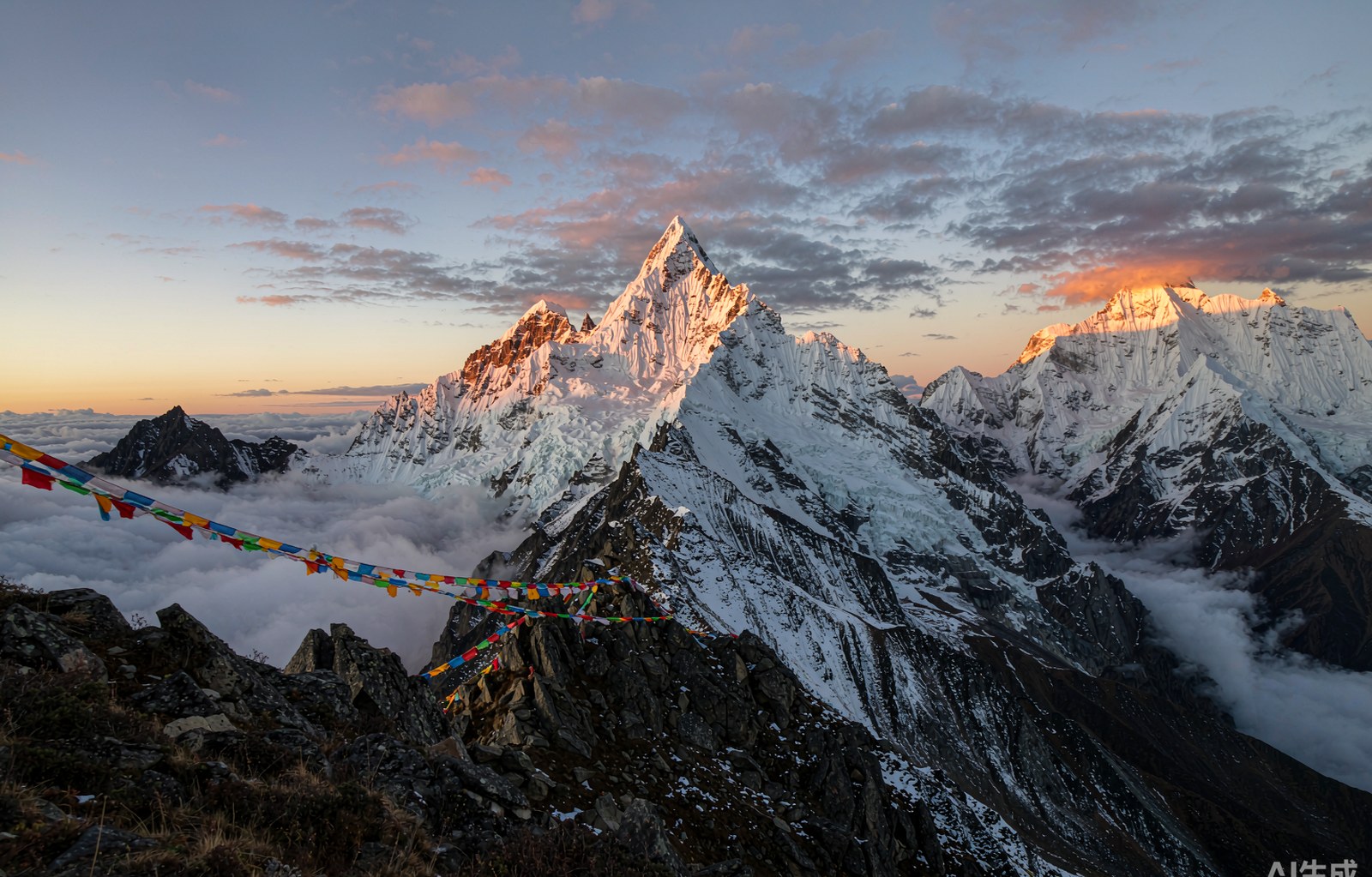
Gongga — "white ice mountain" in Tibetan — stands 7,556 meters, highest of the Hengduan ranges and of all Sichuan, honored as "King of the Shu Mountains." It rises from the Dadu River valley at about 1,000 meters, a vertical relief of over 6,000 meters, among the most visually overwhelming of the world's high mountains. The Hailuogou glacier, Zimei Pass and Quanhua Terrace make up its three-dimensional picture.
Everest is higher, but its base camp already stands at 5,200 meters, for a relative relief of little more than 3,600 meters; Gongga climbs from the dry-hot Dadu valley straight to the summit, more than 6,000 meters of relief within some twenty kilometers of horizontal distance — from Zimei Pass (4,550 m) the snow peak seems to hang overhead. This crush of "plain to snowline in a single bound" makes Gongga, in many photographers' eyes, the finest snow-mountain form on earth.
Hailuogou, on Gongga's eastern slope, is a maritime glacier whose great icefall exceeds 1,000 meters in height and some 1,100 in width — among the world's largest low-altitude glacier falls; the ice tongue reaches down to 2,850 meters, into the forest belt, ice and forest sharing one valley, a rarity worldwide. Boiling springs lie beside the glacier — "watching snow mountains from a hot spring" is an experience Hailuogou alone offers.
蜀山之王立西陲,冰河直下三千尺。 — "The King of the Shu Mountains stands on the western frontier; the glacier plunges straight down three thousand feet."—— Modern verse on Gongga
In Tibetan Buddhism Gongga is one of the five mountain gods of snow. After the first ascent by American climbers in 1932, repeated twentieth-century expeditions paid dearly, success rates long below ten percent — the "King of the Shu Mountains" keeps his majesty with complex high-mountain weather and steep routes. The little-Gongga kora and the "reflection of Gongga" in Lengga Lake let pilgrims answer the holy mountain with their feet instead of conquest.