Location
junction of Mainling and Metog, Nyingchi, Tibet
At 7,782 meters, Namcha Barwa is the highest p...
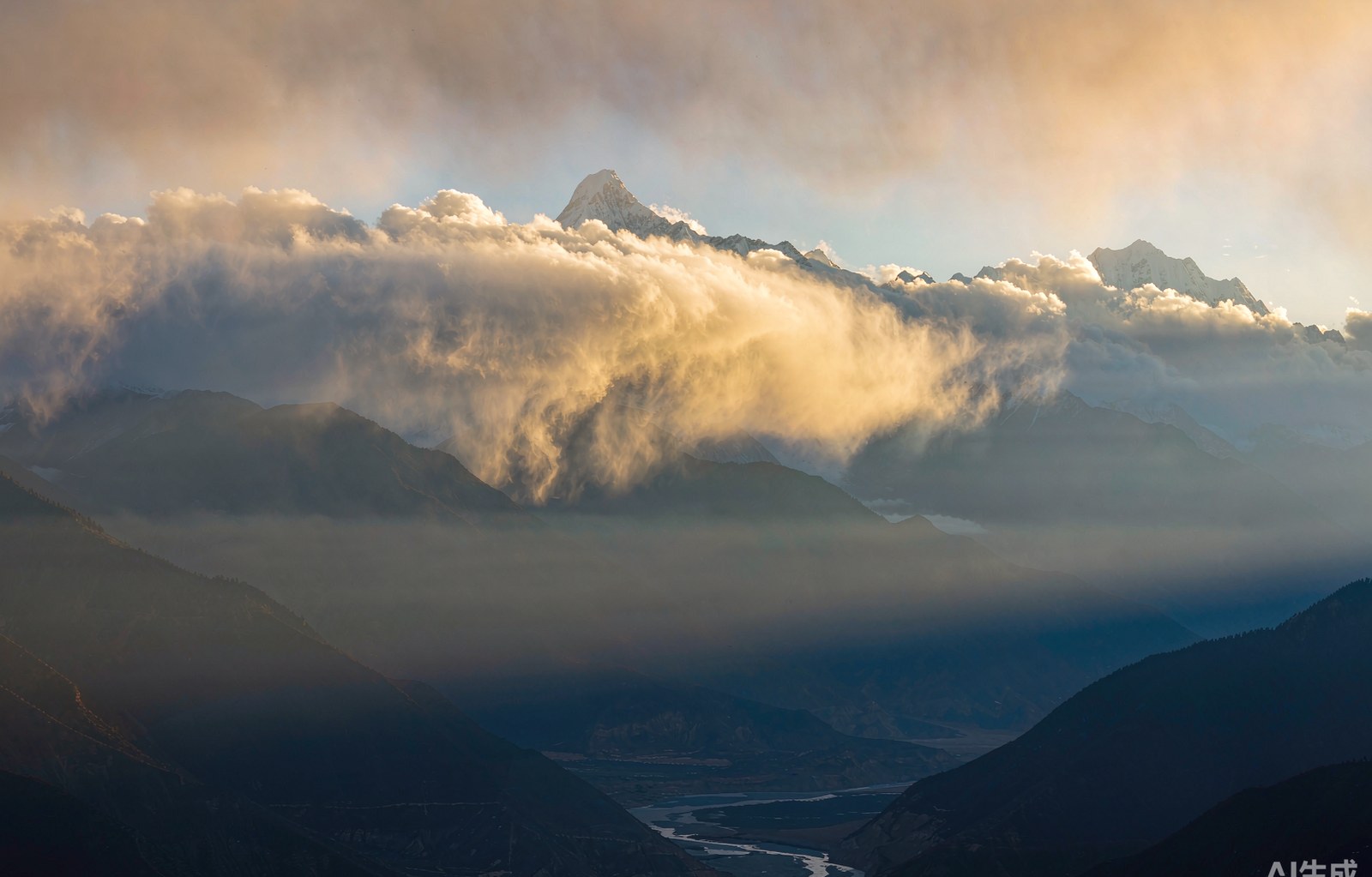
At 7,782 meters, Namcha Barwa is the highest peak at the eastern end of the Himalayas, facing Gyala Peri across the Yarlung Tsangpo Grand Canyon. Wrapped in cloud and mist most of the year, it shows its face fewer than a few dozen days in a year — hence "the shy maiden's peak." In 2005, Chinese National Geographic ranked it the most beautiful snow mountain in China. To see Namcha Barwa takes luck, and patience above all.
Here the Yarlung Tsangpo, flowing east, is twisted bodily aside by Namcha Barwa and cuts the deepest canyon on earth — 6,009 meters at its greatest depth; from rainforest at the valley floor to ice and snow at the summit, one mountain condenses nine natural zones, "a natural museum of vegetation types." The pass between Namcha Barwa and Gyala Peri is the entry of the passage by which warm moist air from the Indian Ocean moves north — from it comes all the mildness that makes Nyingchi "the Jiangnan of Tibet."
The peak is so steep that Indian Ocean moisture condenses ceaselessly into a cap of cloud, hiding the summit. The best vantage points are Susong Village and the Sela Pass: odds are highest on autumn and winter mornings, and the spring scene of peach blossom framed with snow peaks is a matter of luck. When the clouds suddenly part and the triangular summit turns gold-red in the evening light — "those who see Namcha Barwa will be lucky all year": a travelers' saying that has become a local blessing.
南迦巴瓦,云中之山,见者得福。 — "Namcha Barwa, the mountain within the clouds — blessed are those who see it."—— Tibetan saying
Namcha Barwa is brutally hard to climb: in 1992 a joint Sino-Japanese team made the first — and so far only — ascent, but the summiter Yoshinori Okubo died on the descent. In the thirty years since, no one has returned. In the legends of the Monpa and the Tibetans, Namcha Barwa is a god thrusting a spear at the sky; people would rather leave him in the clouds.