Location
Beibu Gulf, Beihai, Guangxi
Weizhou Island, the largest and geologically y...
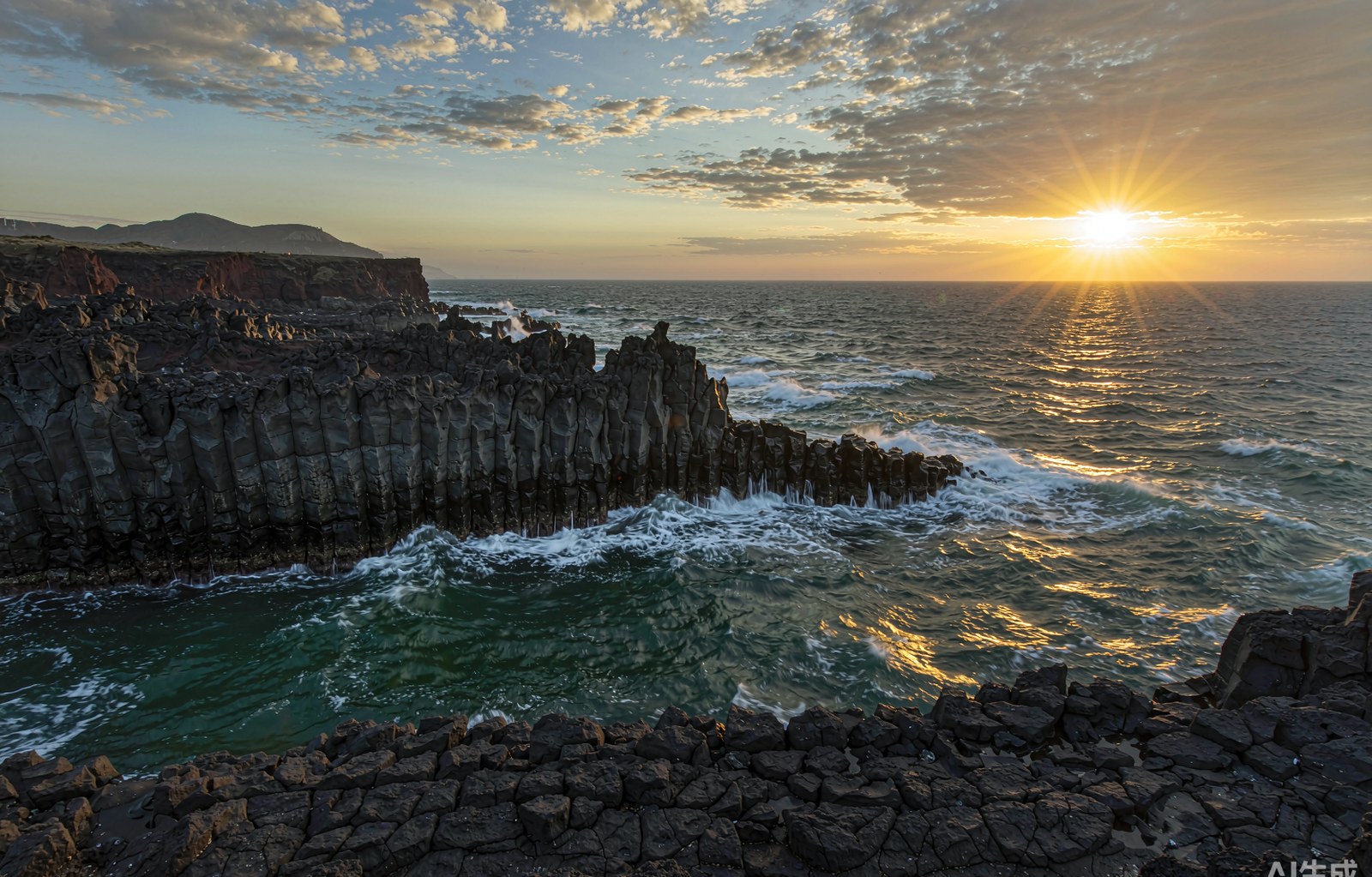
Weizhou Island, the largest and geologically youngest volcanic island in China, lies 21 nautical miles south of Beihai, Guangxi, in the Beibu Gulf. Crocodile Hill Volcanic Geopark preserves the most complete volcanic remains: black basalt and volcanic bombs exposed beside an emerald sea, dark reefs set against blue water, telling the story of the earth's ancient fire.
Weizhou Island was formed by Quaternary eruptions, with volcanic activity continuing until roughly 7,000 years ago. On the sea cliffs of Crocodile Hill, volcanic bombs, lava stratification and vesicular structures are clearly legible; Zhuzaile islet, sea-arch and wave-cut platforms record the ages-long dialogue between waves and rock. The island's volcanic soil grows superb bananas and jackfruit — the "volcano banana" is the sweetest in Guangxi.
The ochre-red cliff of Dishuiping ("dripping crimson screen") seeps water year-round like a curtain of beads; at sunset the red cliff, green trees and golden beach fall into one frame — the signature view of Weizhou. At Wucaitan (Zhima Beach), low tide exposes broad wave-cut platforms where green algae coat the black volcanic rock like a spilled palette at sunrise. The blue trestle pier runs straight into the sea — the finest gallery from which to watch the sun go down over the South China Sea.
潮平两岸阔,风正一帆悬。 — When the tide is level the two shores widen; with the wind fair a single sail hangs.—— Wang Wan, "Mooring at Beigu Mountain" (Tang dynasty)
The waters around Weizhou hold the most extensive coral reefs in Guangxi, where staghorn corals bloom undersea in the reserve. The Notre-Dame church of Shengtang village, built in 1853 by French missionaries from coral stone and volcanic rock, has kept its Gothic bell tower over the fishing village for a century. Nanwan seafood market blazes with lamplight at night, and mantis shrimp and swimming crabs go straight from boat to table — the living breath of island life.