Composition
Twelve regular + eight extraordinary channels
What links the zang-fu into one web and delive...
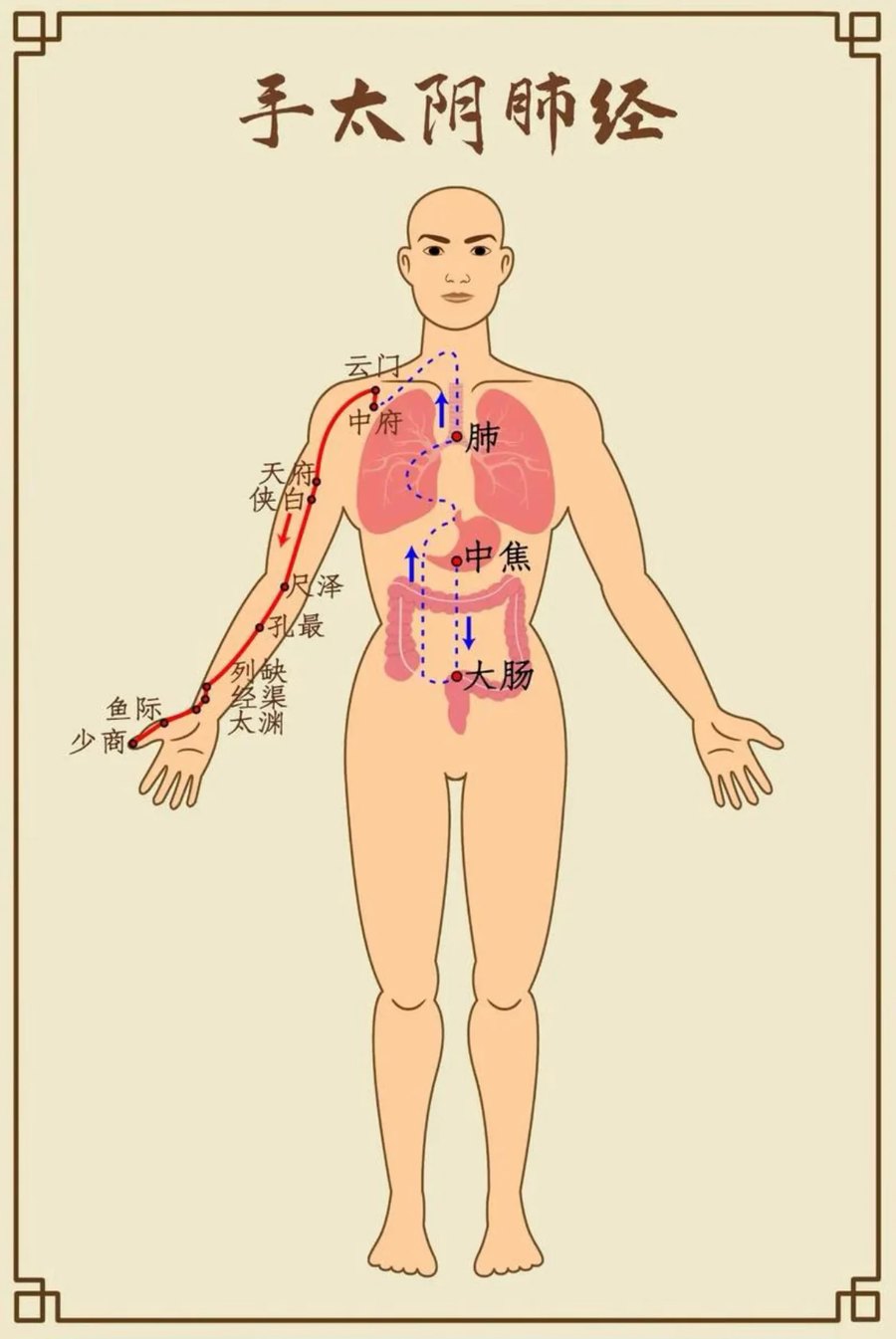
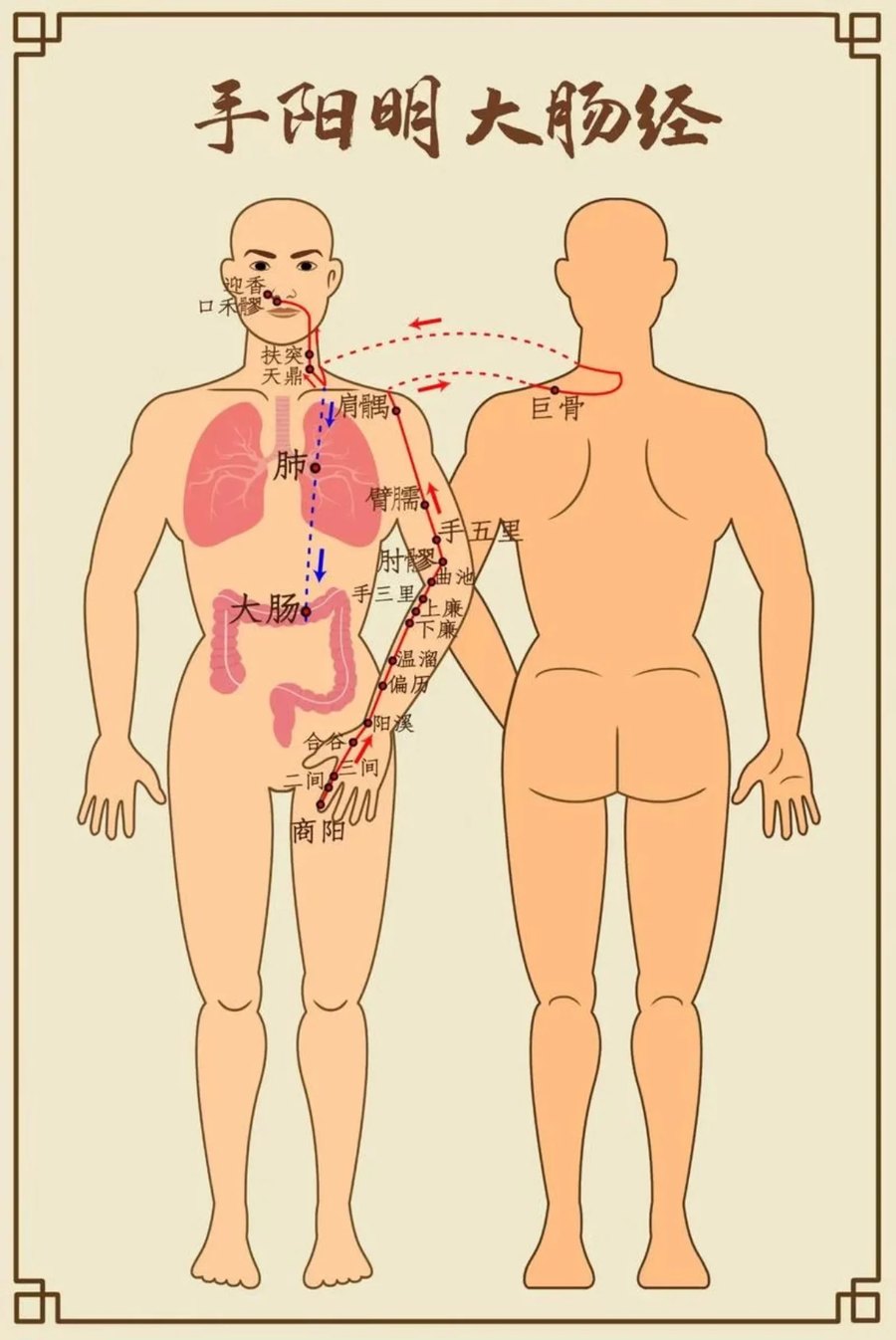
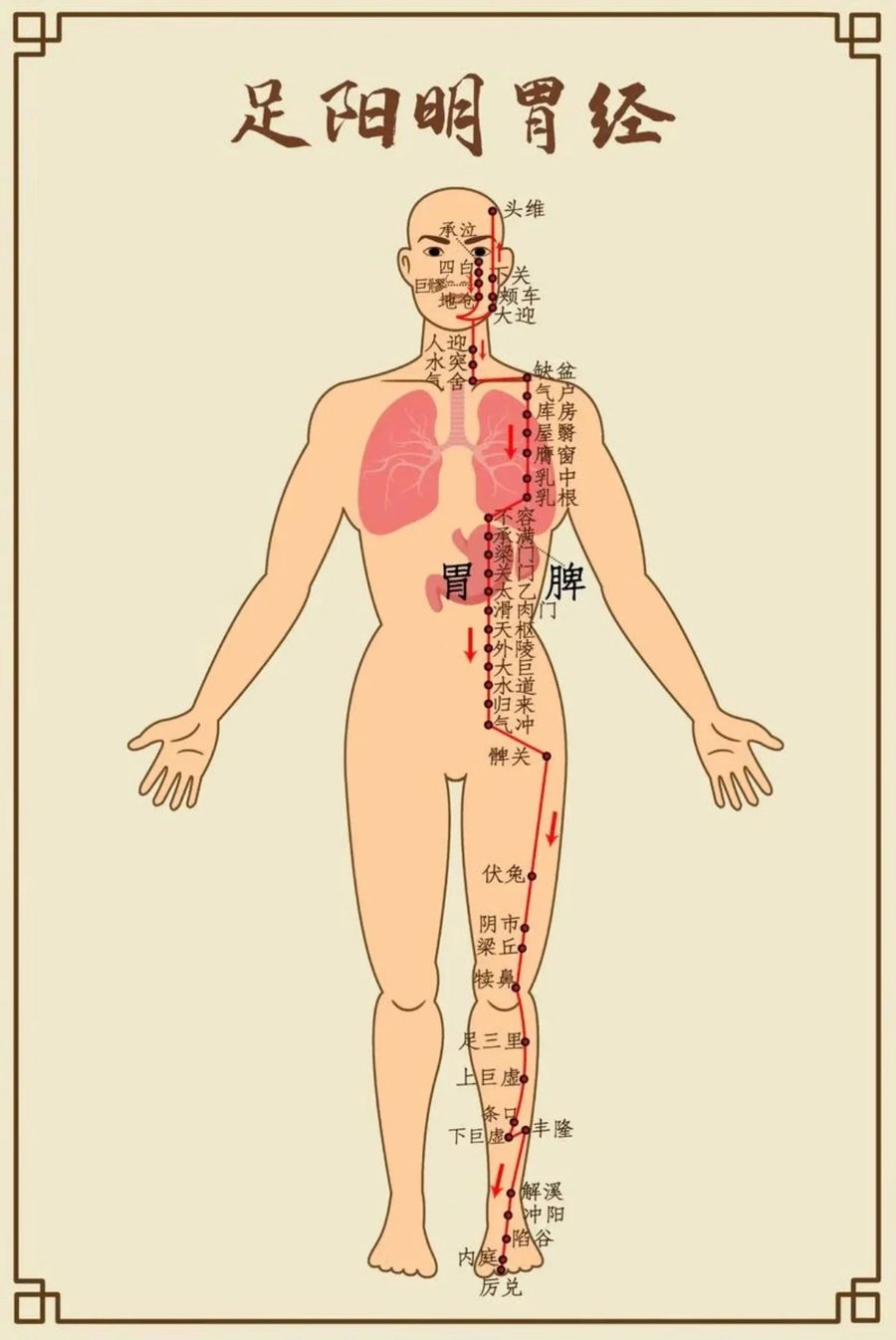
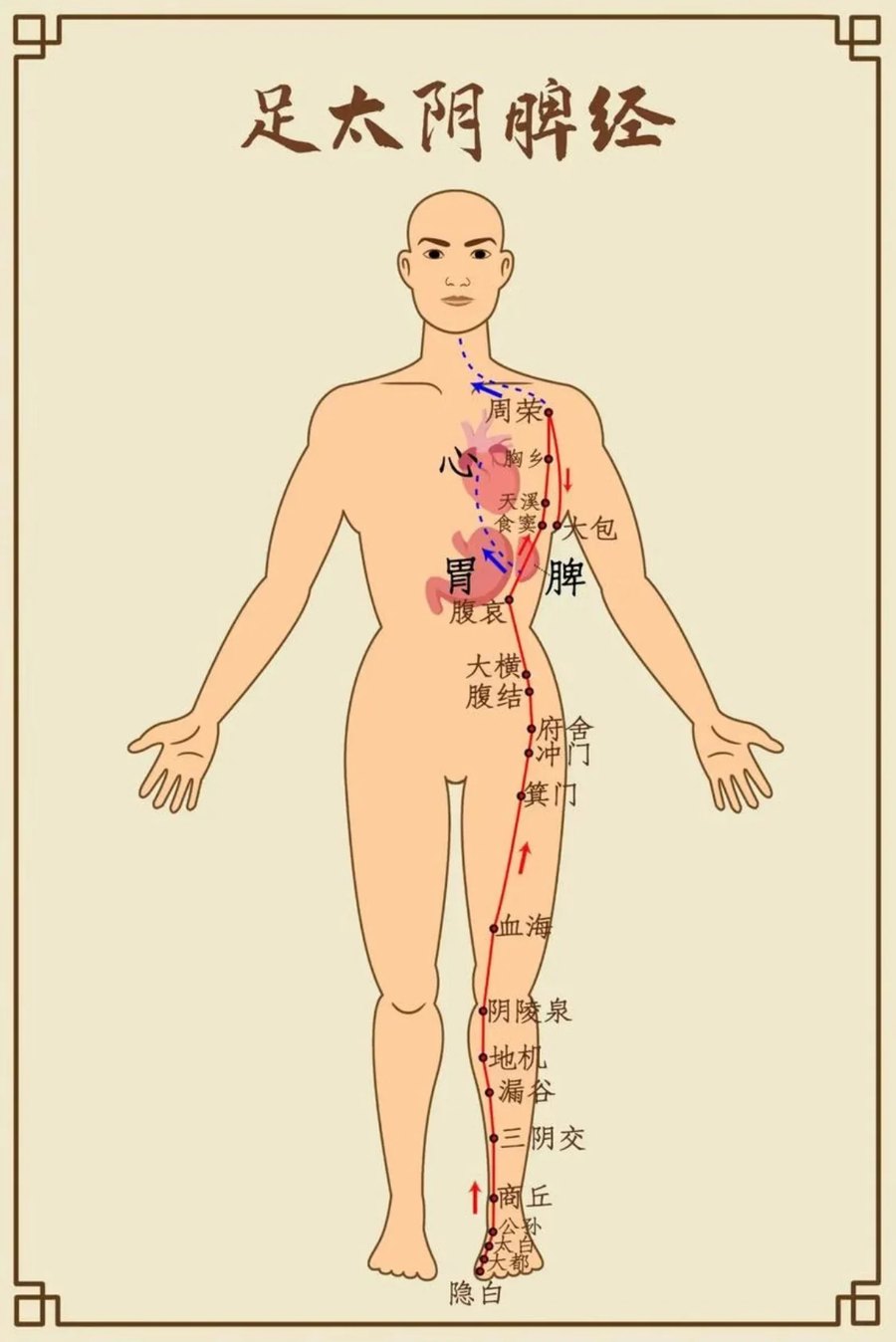
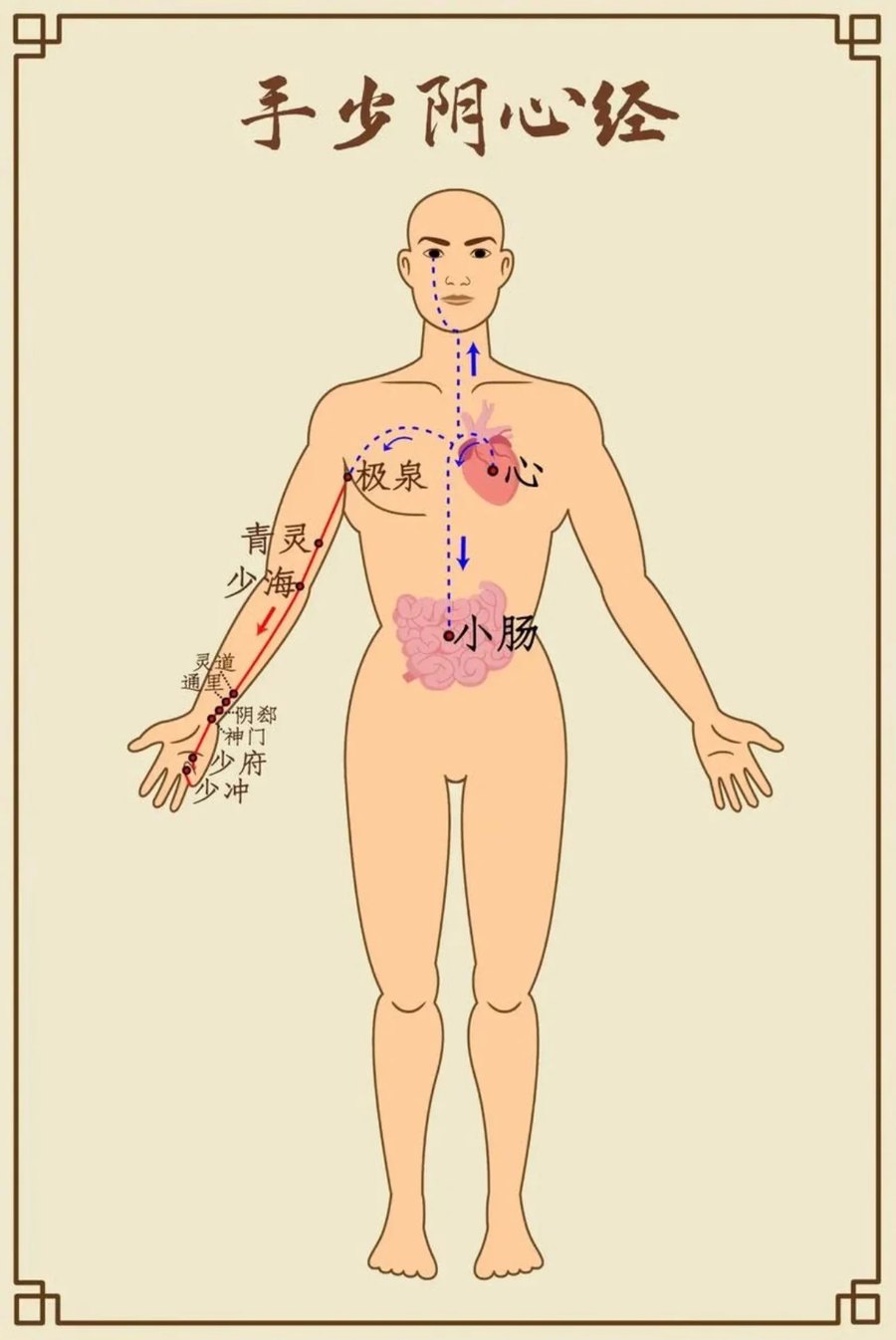
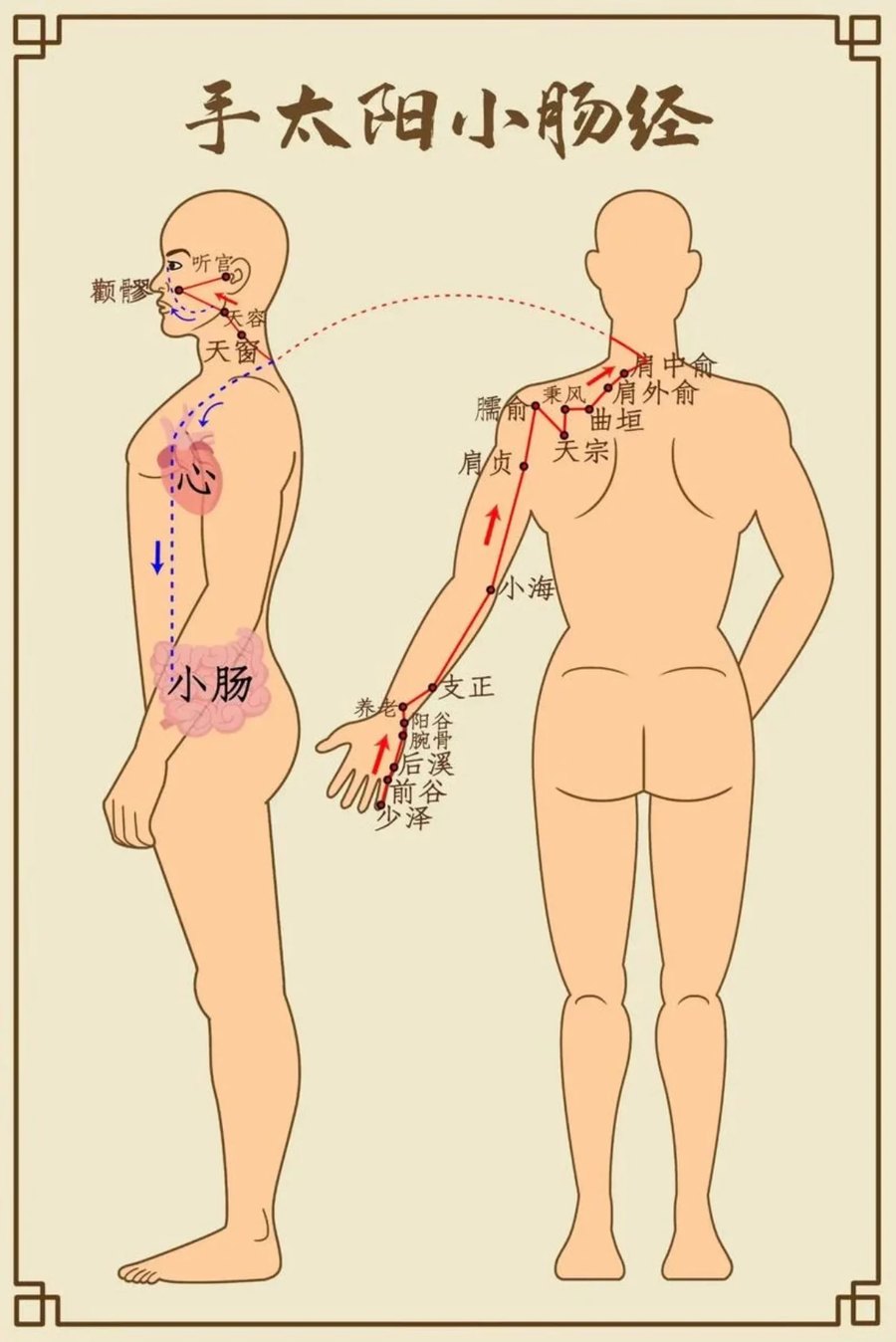
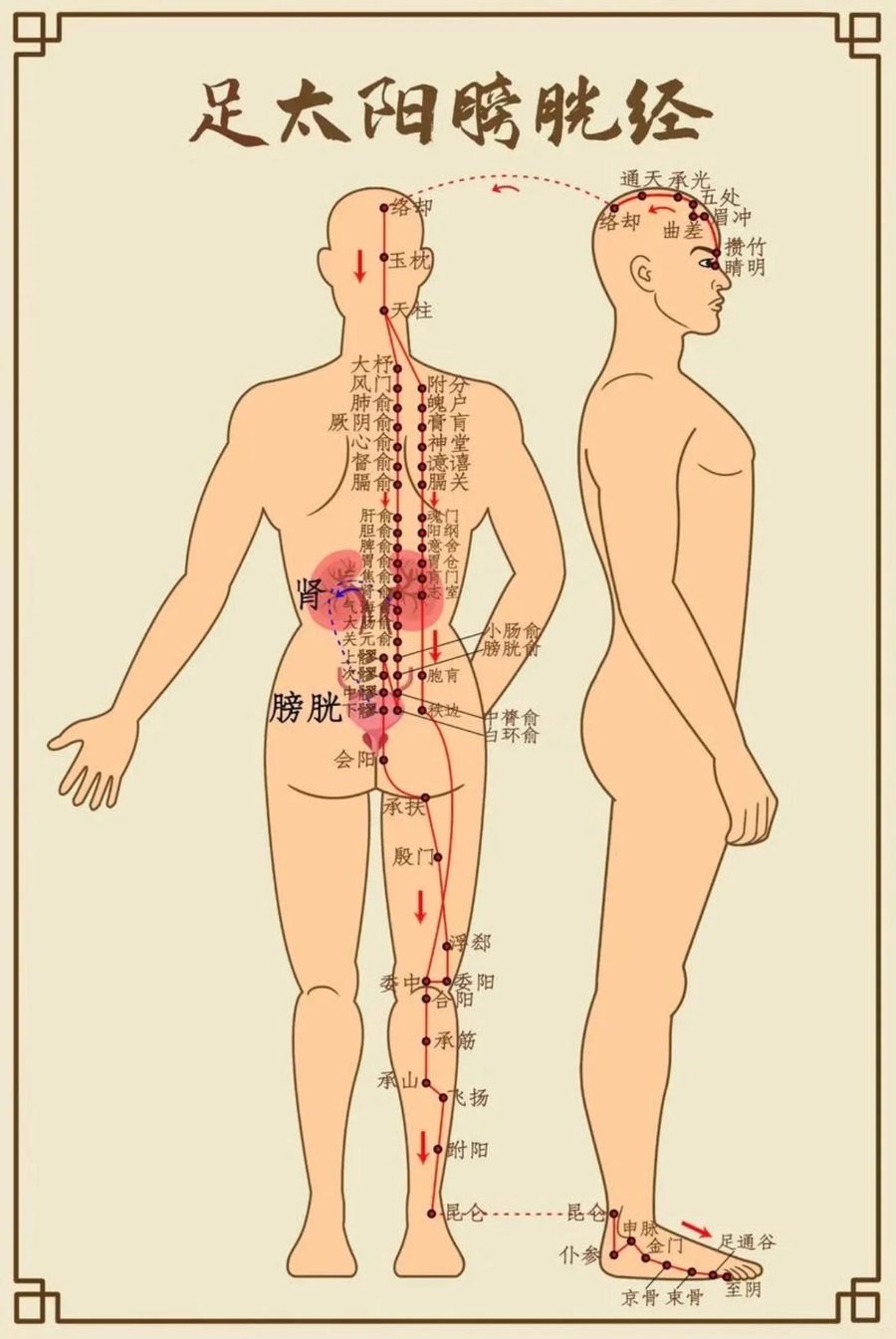
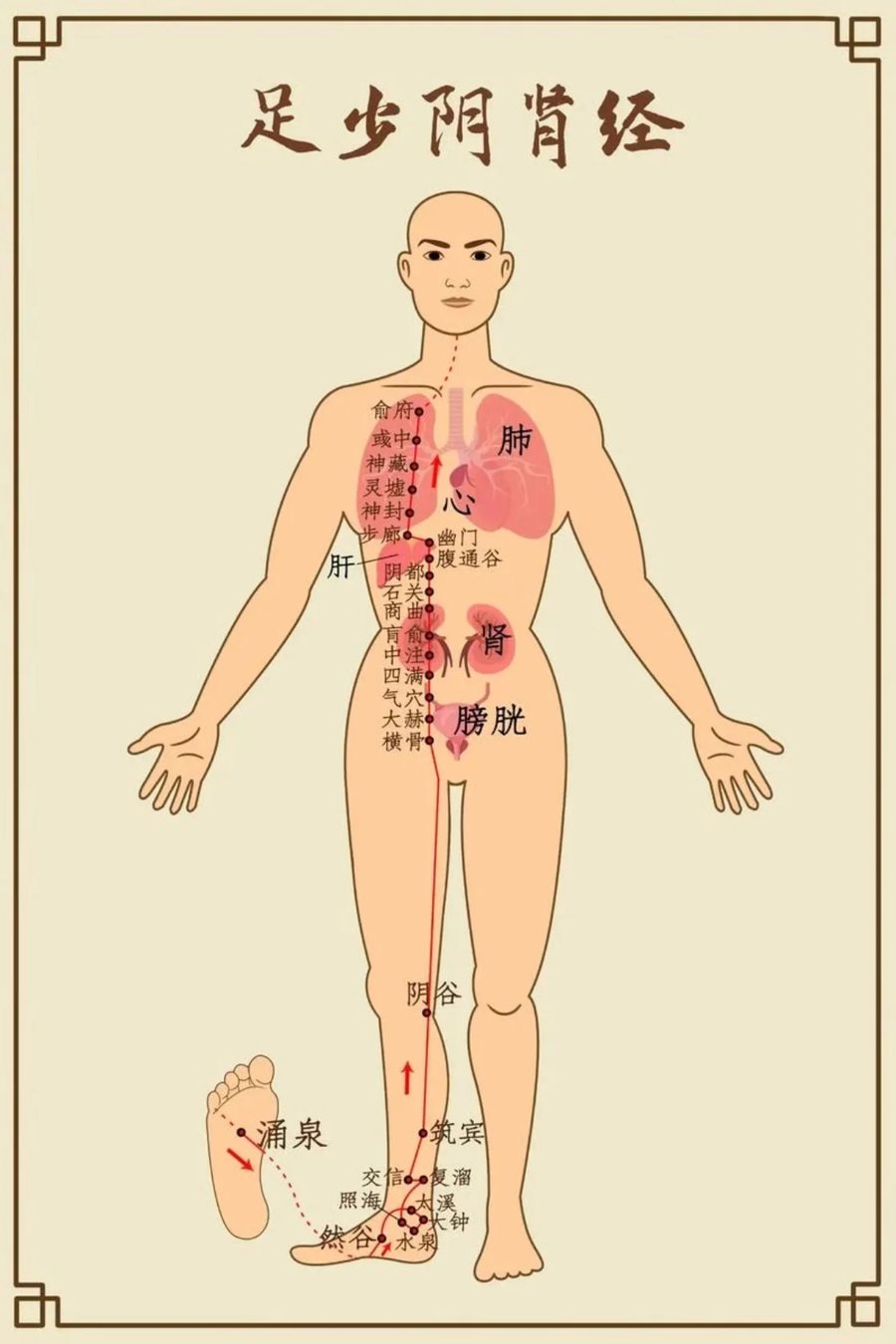
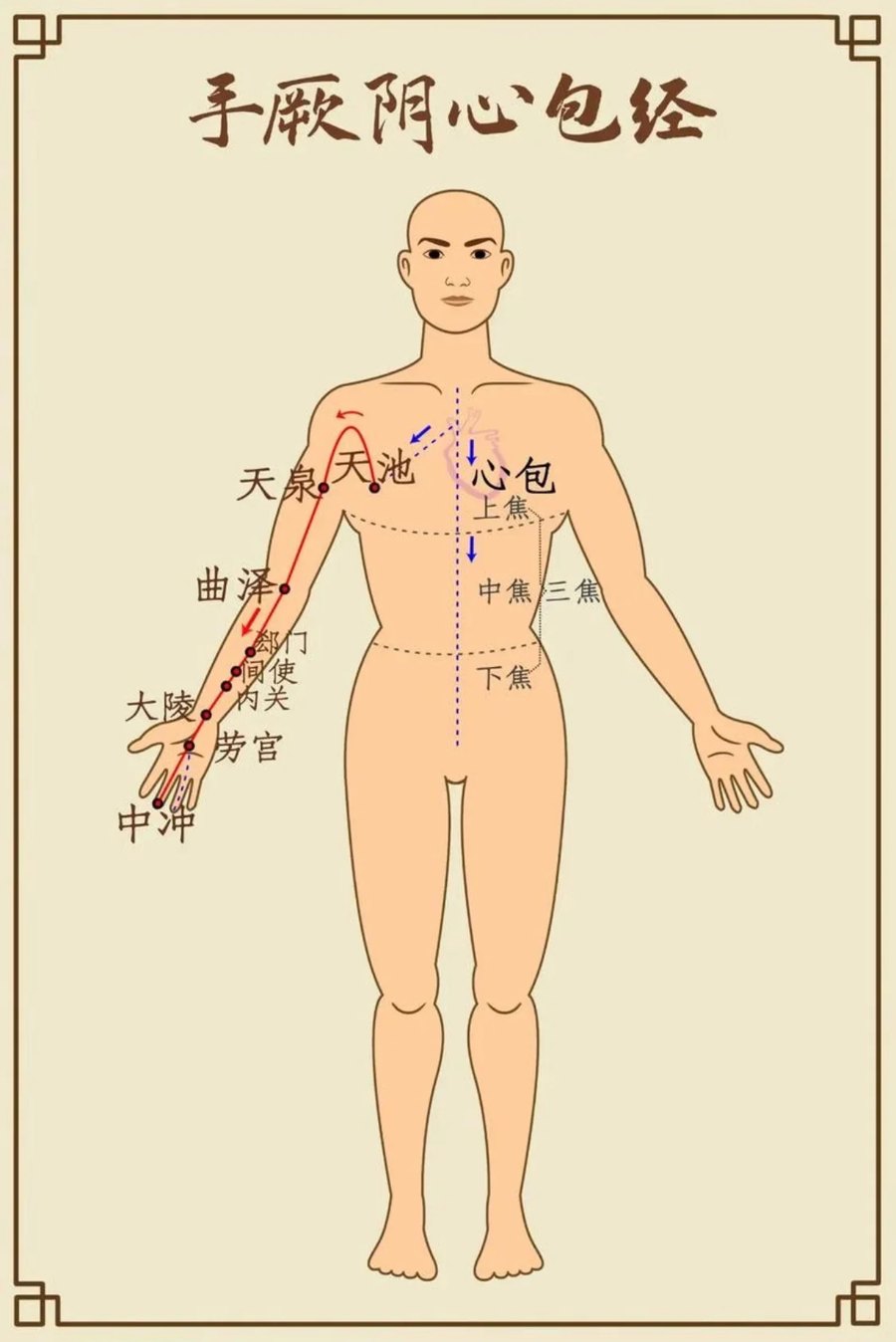
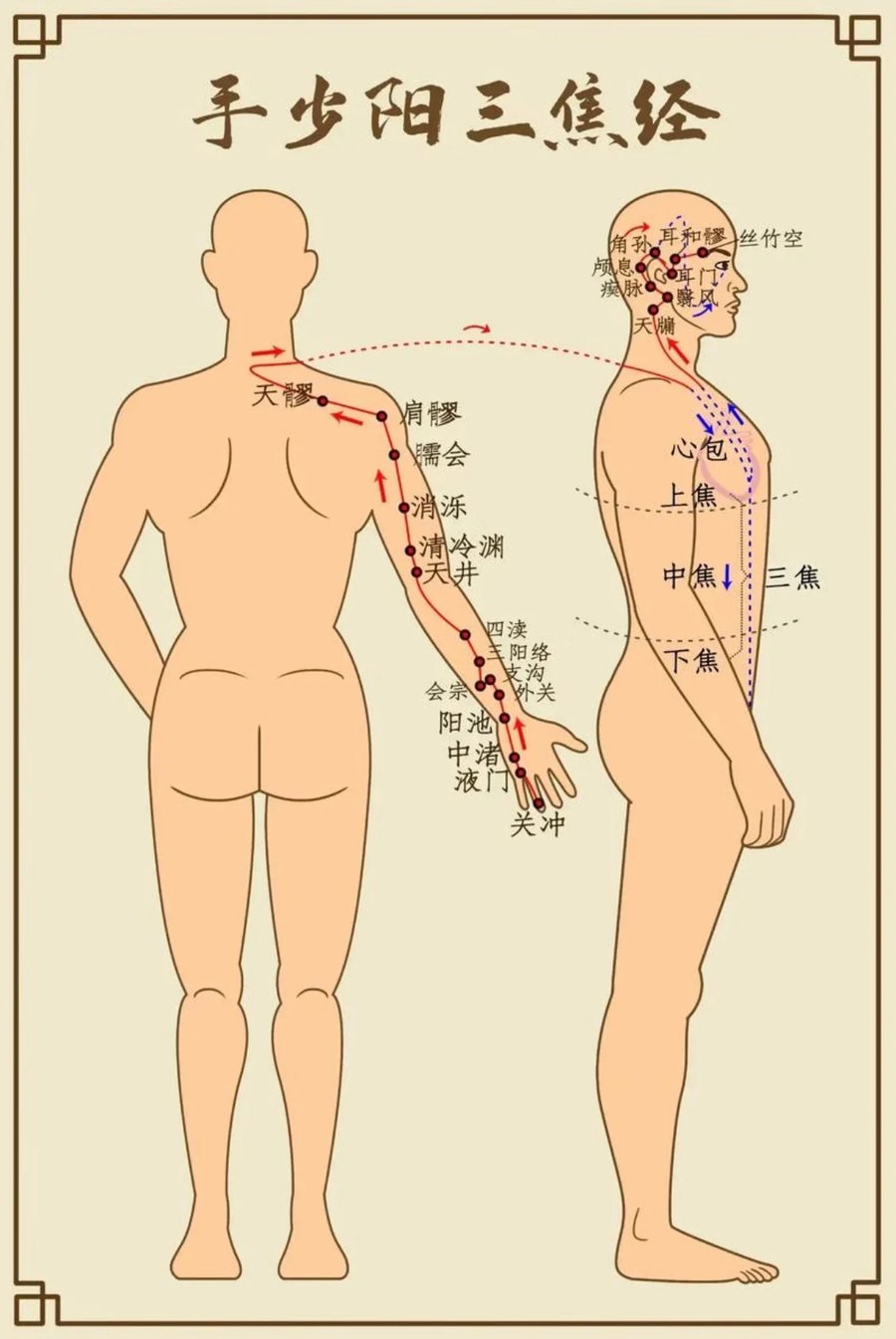
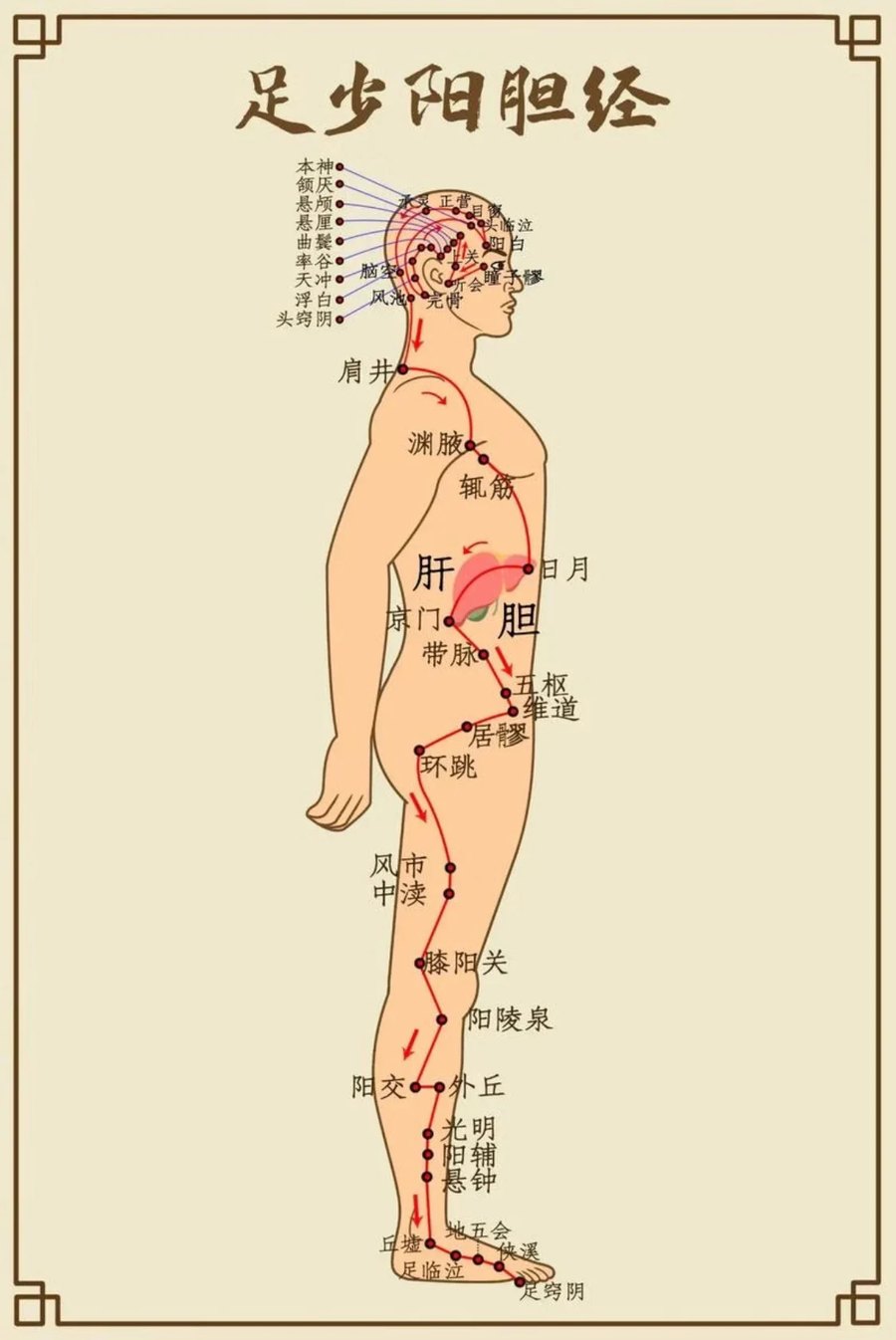
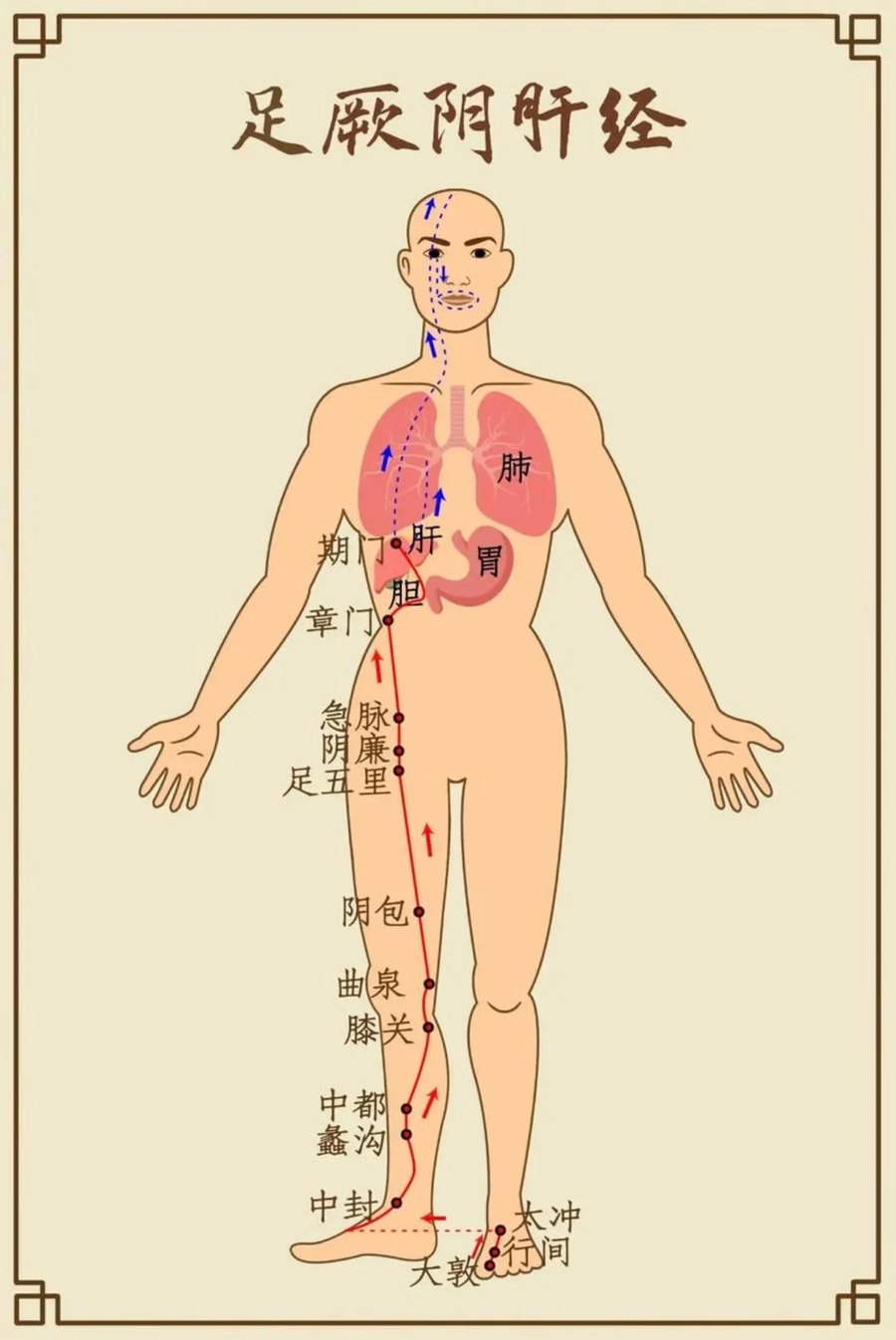
What links the zang-fu into one web and delivers qi and blood to every limb is the channel system. The channels are neither vessels nor nerves, but a functional regulation network mapped by Chinese medicine: the twelve regular channels, named after the organs (lung, large intestine, stomach…), run symmetrically through the body, jointed head to tail "like a ring without end"; upon them lie hundreds of acupoints, like regulating nodes on the network. Acupuncture, tuina, cupping and moxibustion are all means of working upon this web. For overseas readers, the fastest analogy is a metro map: not drawn by surface streets (anatomy) but by the actual running lines (functional connection) — you may not find that line on the dissection table, yet follow the route and press, and the sour-distended sensation is real.
The twelve regular channels are named "three yin of the hand, three yang of the hand, three yang of the foot, three yin of the foot": yin channels belong to the zang, yang to the fu, and their courses are relatively fixed — the hand taiyin lung channel, for instance, rises from the middle burner and runs down the fore-arm's inner front edge to the thumb; the foot yangming stomach channel descends from the face to the foot. Each channel connects directly to its zang or fu, and joins its paired channel at the ends of the hands and feet — twelve channels linked head to tail, qi and blood circulating through them without end. This ring is the master skeleton of the Chinese understanding of whole-body connection.
The channels are not anatomical structures — Chinese medicine itself never claimed otherwise: the Neijing's descriptions are from first to last functional — "where the channel passes, so its indications reach." Modern researchers have searched the morphological basis of the channels from nerve, fascia and connective-tissue angles, and no single answer has emerged. The pragmatic stance for learners: treat the channels as a functional map calibrated over two thousand years of clinical practice — a map need not correspond to a single terrain, yet the routes it marks do lead to real effects.
The twelve channels are not twelve unrelated parallel lines but six "partner pairs": the lung pairs with the large intestine, the heart with the small intestine, the pericardium with the sanjiao, the spleen with the stomach, the kidney with the bladder, the liver with the gallbladder. The rule: a yin channel belongs to its zang and connects to its partner fu; a yang channel belongs to its fu and connects to its partner zang. Each pair joins at the ends of the hands or feet, and qi and blood flow between them: when lung qi descends properly, the large intestine's conveyance has power; when the spleen transports well, the stomach's reception runs smooth. One zang, one fu; one yin, one yang — two gears meshed.
In the clinic this is called "treating exterior and interior together": a cough (lung) with constipation (large intestine) calls for points of both channels; mouth ulcers from heart-fire with dark scanty urine ("the heart shifting heat to the small intestine") calls for clearing the heart and promoting urination at the same time. For overseas readers: read the pairs as functional upstream–downstream coupling — the zang governs intake and transformation (yin), the fu governs conveyance and excretion (yang). On the channel map's next page, then, comes a chart of "who shakes whose hand."
The twelve channels are what a person lives by, what illness forms from, what health is governed by, what illness rises from. — The twelve channels: by them a person lives, by them illness forms, by them order is kept, by them illness is raised away.— Huangdi Neijing · Lingshu · "Jingbie"
The flow order of the twelve channels runs: beginning at the lung channel → large intestine → stomach → spleen → heart → small intestine → bladder → kidney → pericardium → sanjiao → gallbladder → liver, and back to the lung again — round and round, without cease. Chinese medicine mapped this day-cycle onto the twelve two-hour watches as the "midnight-noon ebb-flow": the lung commands the Yin hours (3–5 a.m.), the large intestine the Mao hours (5–7), the stomach the Chen hours (7–9), the spleen the Si hours (9–11), the heart the Wu hours (11–1), the small intestine the Wei hours (1–3 p.m.), the bladder the Shen hours (3–5 p.m.), the kidney the You hours (5–7 p.m.), the pericardium the Xu hours (7–9 p.m.), the sanjiao the Hai hours (9–11 p.m.), the gallbladder the Zi hours (11 p.m.–1 a.m.), and the liver the Chou hours (1–3 a.m.).
The "timetable" reads like mysticism but lands in life quite concretely: the Chen hours of stomach command are precisely breakfast time; the Si hours of spleen command suit focused work (the spleen governs transformation — and reflection); a short nap at high noon, when the heart commands, is the best way to nourish it; the You hours of kidney command call for quiet and no heavy sweating; and the Chou hours (1–3 a.m.), when the liver commands, must be spent in deep sleep — "when a person lies down, the blood returns to the liver," and the hours a night owl steals are exactly the liver's. Modern chronobiology's work on cortisol, melatonin and digestive rhythm converses with the old idea of taking time as a health variable: the details need not match one for one, but the rhythm is real.
Acupoints lie along the channels — nodes where qi and blood gather, where illness shows, and where stimulus is received. Common points mostly sit in muscle grooves and bone hollows where pressure yields a distinct sour-distended feeling: Hegu in the tiger's mouth of the hand; Neiguan three finger-widths above the wrist crease between the two tendons; Zusanli four finger-widths below the outer knee-eyes. Gentle self-massage of these points is the safest of the tradition's self-regulation tools: after long sitting, knead Zusanli; for chest oppression and nausea, press Neiguan; for tension headaches, Hegu — tools ordinary people have used daily for centuries.
An honest boundary must be stated: acupoint massage belongs to wellness — safe and easy to learn, but never a substitute for medical care; certain points must be avoided in pregnancy; needling itself belongs to licensed professionals alone. Modern research has accumulated comparatively strong evidence for acupuncture in pain relief and relief of nausea and vomiting, with evidence still accruing elsewhere. Learn the channels and points as a technology of self-care, not a universal therapy — that is the right way for the modern reader to receive this inheritance.