Location
Suzhou, Jiangsu
The classical gardens of Suzhou are the summit...
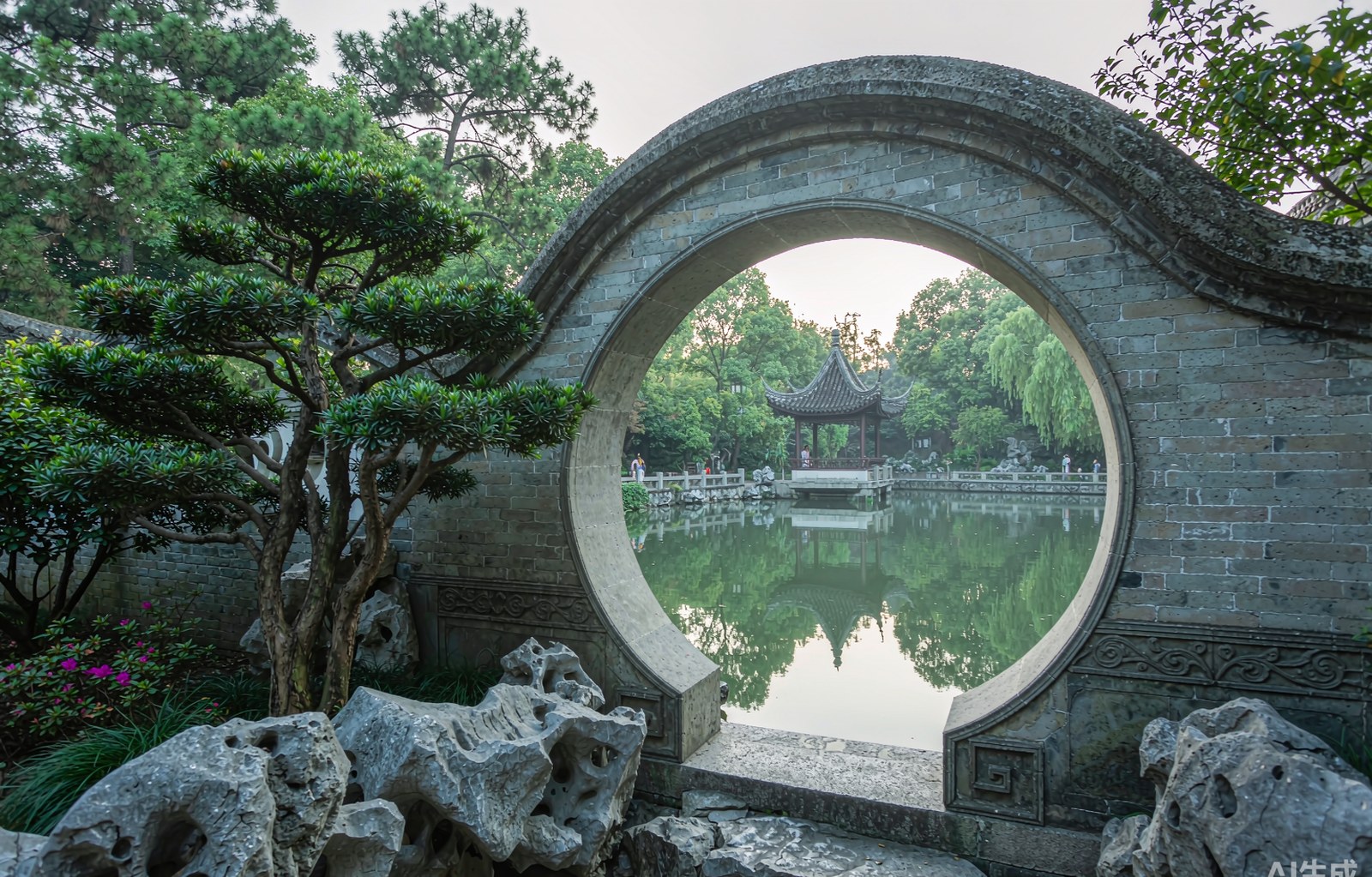
The classical gardens of Suzhou are the summit of the literati art of garden-making: piled rockeries and ordered water, cultivated flowers and trees, composed architecture, and the finishing touches of calligraphy and painting — four elements creating, within a few acres, landscapes to roam, to dwell in and to gaze upon. The Humble Administrator's Garden, the Lingering Garden, the Master-of-Nets Garden, the Canglang Pavilion and the Lion Grove, among others, are inscribed as a World Heritage Site — an Eastern philosophy of space offering "the delight of mountains and waters without leaving the city."
A garden is a literati landscape painting in three dimensions: rockeries take their bearing from true mountains, judged by the aesthetic of Taihu stones — "lean, wrinkled, leaking, perforated." Water is arranged with an eye to rhythm of gathering and dispersal: the half-mu pond of the Master-of-Nets Garden breathes with the feeling of vast waters. Lattice windows leak scenes, winding corridors shift the view at every step, and the art of "borrowed scenery" takes in both the pagoda beyond the walls and the moonlight within — what Ji Cheng's *Yuanye* (The Craft of Gardens) called "made by human hands, yet seeming opened by heaven."
The Humble Administrator's Garden was built in the Zhengde era of the Ming; its owner Wang Xianchen named it for Pan Yue's *Fu on Dwelling in Idleness* — "the governance of the ungifted." The Hall of Distant Fragrance faces the water, and in summer the lotus breeze carries scent; it is ranked with the Summer Palace, the Mountain Resort and the Lingering Garden among China's four great gardens. The Lingering Garden's architectural spaces are the most exquisite in Jiangnan; the 6.5-meter Guanyun Peak is the supreme achievement of garden stone placement, and the osmanthus fragrance of its autumns is a seasonal memory passed down among Suzhou people.
不到园林,怎知春色如许。 — How would one know spring could be like this, without entering the garden?—— Tang Xianzu (Ming), *The Peony Pavilion*
The Canglang Pavilion is Suzhou's oldest surviving garden (Northern Song) — "scenery is won before you enter," borrowing a stretch of water from beyond its walls. The Lion Grove is famed for its labyrinthine Taihu-stone mountains, once drawn by the painter Ni Zan. Beyond the four principles — rockery, water, architecture, plants — lies the spirit of xieyi suggestion: "a fistful of stone for a mountain, a ladle of water for a lake." The garden is the most tender and most refined form of the Chinese longing for nature.