Location
rises in Qinghai · flows to the Bohai Sea
The mother river of Chinese civilization. Risi...
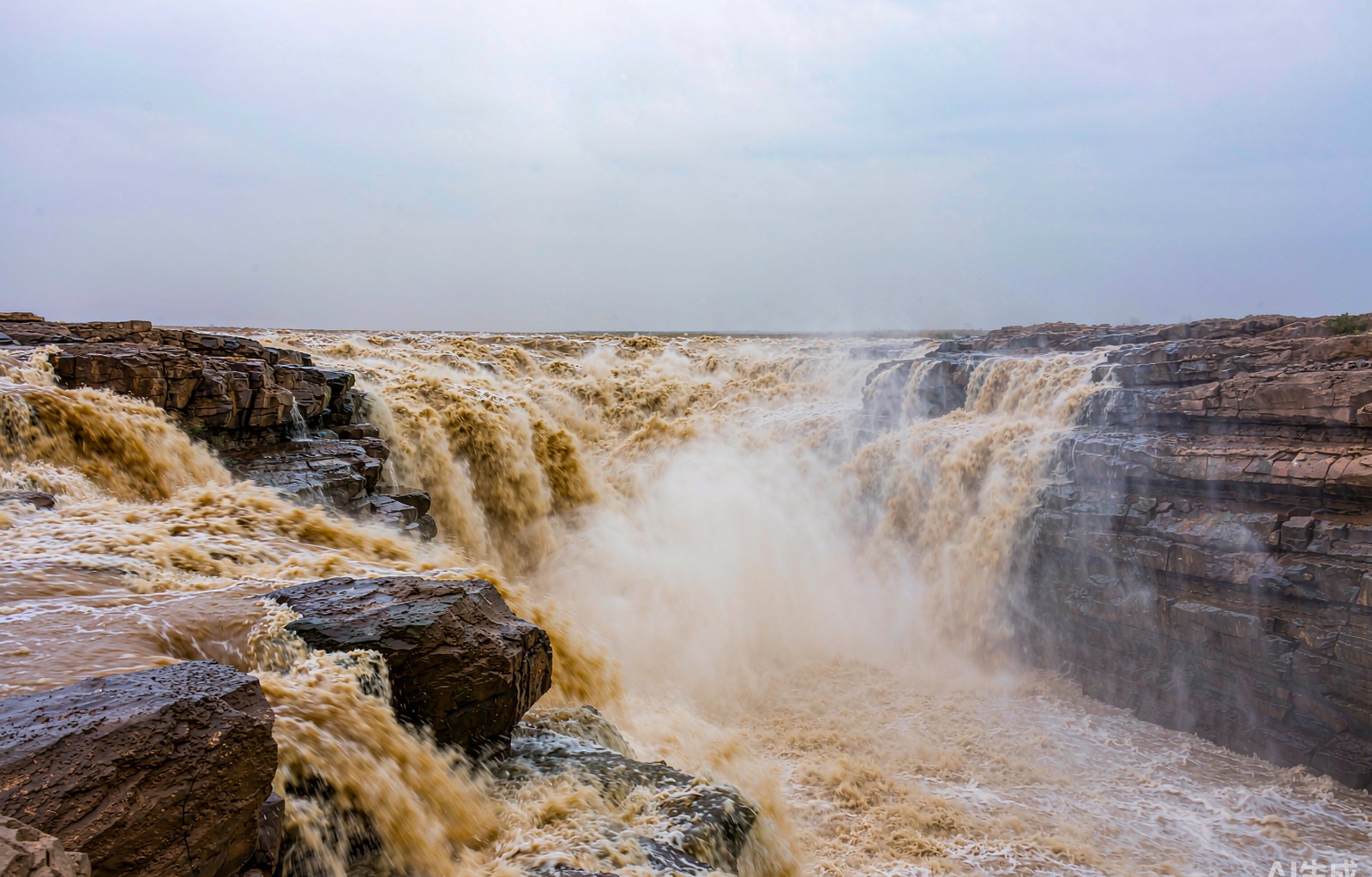
The mother river of Chinese civilization. Rising on the Bayan Har Mountains of the Qinghai-Tibet Plateau, the Yellow River runs 5,464 kilometers, the second longest in China. Loess and silt shaped the Central Plains and nurtured the earliest dynasties; its unruly temper — "bursting its banks twice in three years, shifting its course once a century" — made the taming of the river a second narrative running through all of Chinese history. One Yellow River, half of China.
The true source is the Yueguzonglie basin on the northern slopes of the Bayan Har Mountains; the Star Sea (Xingxiuhai) spreads like shattered mirrors, and Lakes Gyaring and Ngoring gleam like the eyes of the plateau. The river crosses the Jishi Mountains into the Zoige grasslands at the First Bend of the Nine Bends, swings northwest then east, and on the Tangke grasslands draws its great zigzag — the loop whose embrace holds the Loess Plateau and the heartland of Central Plains civilization.
Where the river cuts the Jinshaan Gorge between Shanxi and Shaanxi it takes in the bulk of its annual silt — the Loess Plateau's loose soil, sparse vegetation and concentrated storms once pushed the sediment load to 37 kilograms per cubic meter of water. Behind the saying "a leap into the Yellow River cannot wash you clean" lies the silt settling year after year in the lower reaches, raising the riverbed about ten centimeters a year; near Zhengzhou the bed now stands several meters above the surrounding land — a "hanging river," the longest-enduring tug-of-war in the history of water management.
黄河之水天上来,奔流到海不复回。 — "The waters of the Yellow River come down from heaven, rushing to the sea, never to return."—— Li Bai, "Bring in the Wine" (Tang dynasty)
The legend of Yu the Great "dredging channels to guide the waters," the twelve canals Ximen Bao drew from the Zhang in the Warring States era, the "eight hundred years of calm flow" after Wang Jing's Eastern Han works, Pan Jixun's Ming maxim "narrow the channel to scour the silt" — the history of taming the Yellow River is the history of Chinese hydraulic thought. From 1952 came the people's governance of the river; since 2019 the ecological protection and high-quality development of the basin has been raised to national strategy, and the Xiaolangdi dam's sediment-flushing artificial floods send hundreds of millions of tons of silt to the sea each year. The ancient mission of "the sage Yu controlling the waters" continues as modern engineering.
The painted pottery of Yangshao, the black pottery of Longshan, the palace-city of Erlitou — the archaeological core zone of Central Plains civilization overlaps almost exactly with the river's alluvial fan. The capitals of the Xia, Shang, Zhou, Qin and Han — Xianyang, Chang'an, Luoyang, Kaifeng — all rest within the Yellow River's bend. The roar of Hukou Falls, the boatmen's chants of Liangjiaqi, the high flights of Shaanbei folk song — all grew from this turbid, generous river.