Location
junction of Nantou, Chiayi and Kaohsiung, central Taiwan
Yushan stands beside the Tropic of Cancer, its...
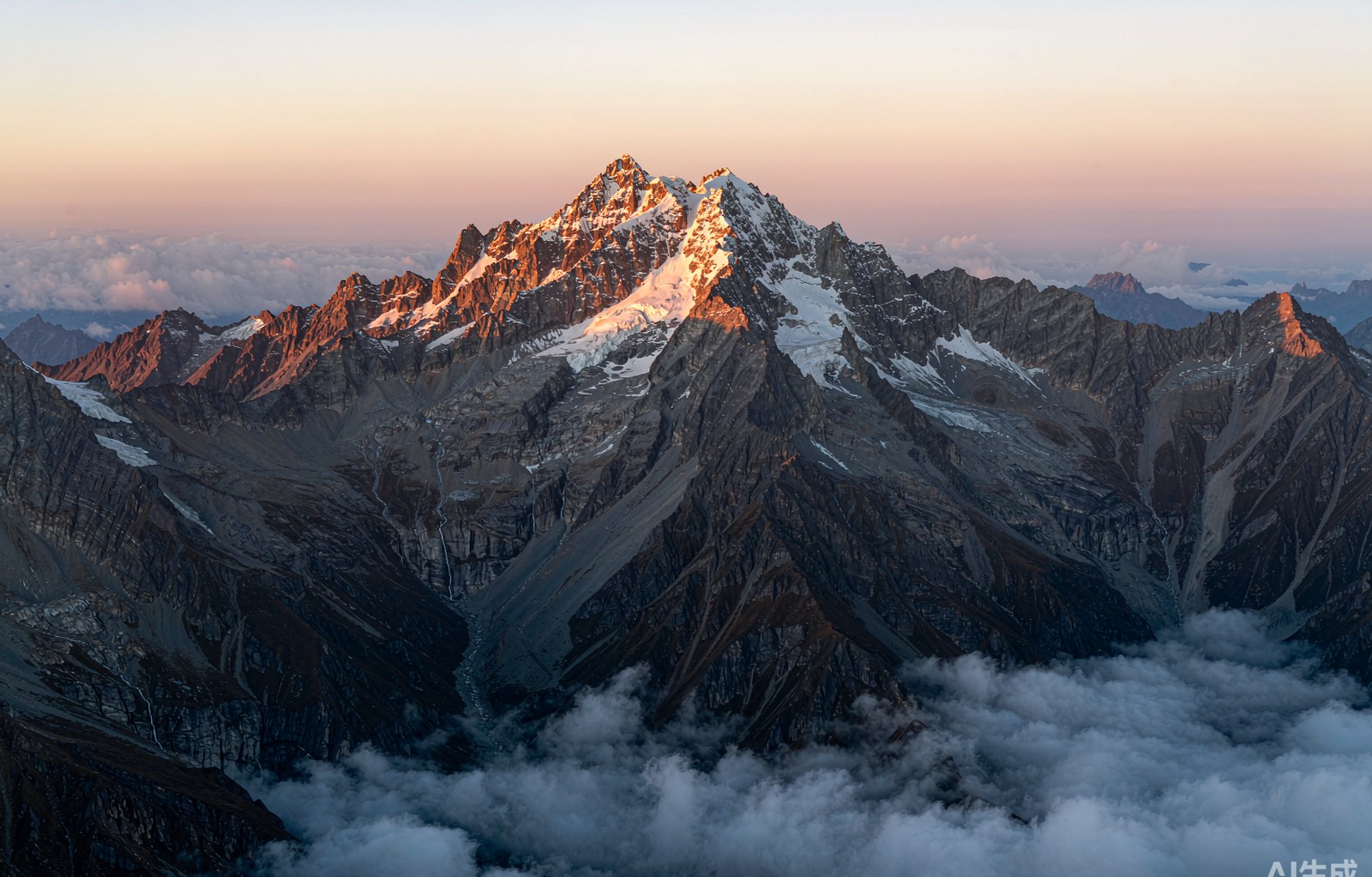
Yushan stands beside the Tropic of Cancer, its main summit at 3,952 meters the highest peak in eastern China. Thrust up by the collision of the Eurasian and Philippine Sea plates, its summit retains traces of Quaternary glaciers, and winter snows leave it like jade — hence "Jade Mountain." It is one of the most complete vertical ecosystems in southeastern China, and the spiritual emblem of the Taiwan ranges.
Yushan sits on the convergence zone of the Eurasian and Philippine Sea plates. For millions of years the Philippine Sea plate has driven northwest, intensely folding the old Pacific sedimentary strata and raising the Central Mountain Range of Taiwan; the Yushan area is the core of the fastest uplift. Neotectonic movement continues — an uplift of several centimeters a year means Yushan "is still growing." The mountain is mainly metamorphic sandstone and slate with steep rock walls; its main peak together with the East, North and South peaks are known as the Yushan group.
Near the Tropic of Cancer, the mountain rises from subtropical evergreen forest through warm-temperate broadleaf and temperate mixed forest to cold conifer forest, and on to alpine meadow and bare rock tundra. Taiwan fir and Yushan juniper twist into gnarled forms near the snowline; black bears, Mikado pheasants and salamanders live among them. One mountain condenses the full band-spectrum from equator to pole — a textbook sample of "vertical natural zones."
海上仙山第一峰,天风吹袂立苍龙。 — "First of the immortal peaks upon the sea; heaven's wind fills my sleeves as I stand upon the gray dragon."—— Modern verse on Yushan
The Bunun and Tsou peoples have revered Yushan as a sacred mountain for generations; in their traditional lands it was a hunting ground and the home of ancestral spirits. Under Japanese rule its name "Niitakayama" — New High Mountain — briefly ranked first in East Asia; today the main-peak trail, relayed by Paiyun Lodge, is among Asia's popular high-mountain routes. On clear days the summit looks east to the Pacific and west to the cloud sea of Alishan — a great peak like a snowy island, standing between the sea and sky of China's southeast.