Historical depth
From the Han hundred entertainments, 2,000+ years
Chinese acrobatics is among the oldest and mos...
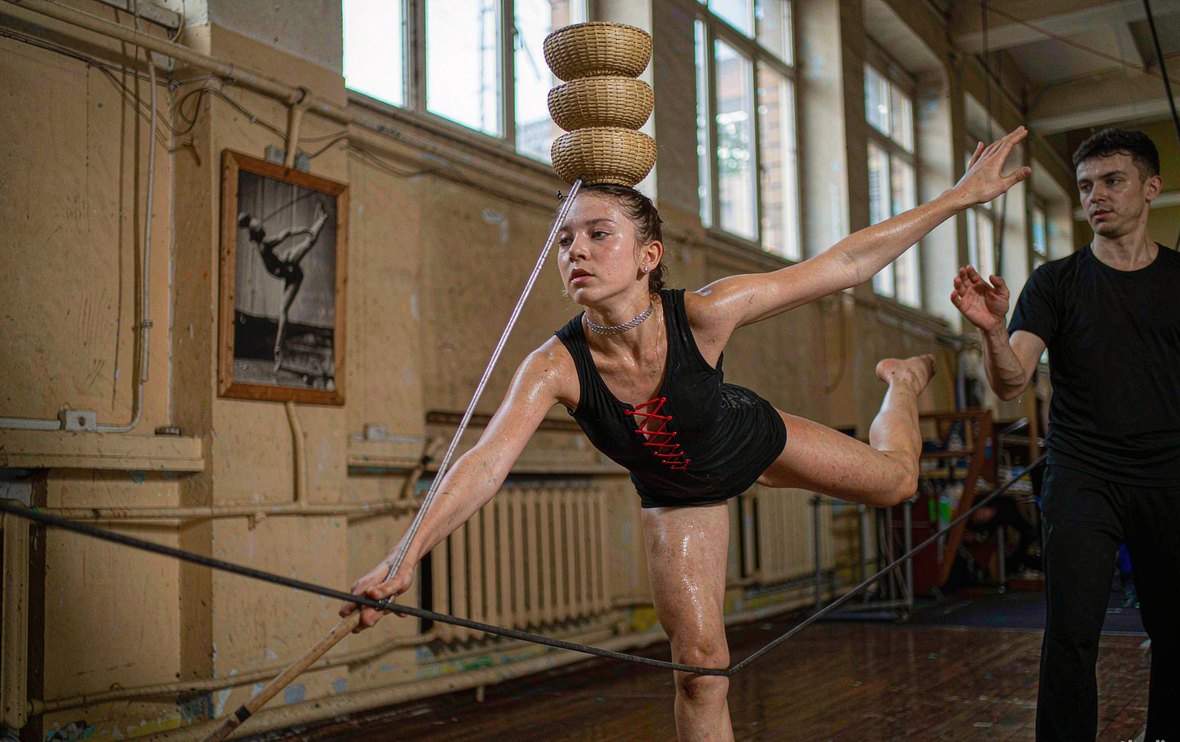
Chinese acrobatics is among the oldest and most continuously practised performance arts in the world: taking bodily skill, balance, strength and invention as its language, it turns the limits of the body into a spectacle of beauty. Its historical depth is startling: the hundred entertainments of the Han already included lifting tripods, climbing poles and walking ropes (*The Records of the Grand Historian* notes the wrestling plays and Lord Huang of the Eastern Sea handling snakes and swallowing knives); in the Tang a pole carried several performers singing and dancing; in the Song the professional entertainment quarters turned acrobatics into a trade; by the Ming and Qing the repertoire ran from foot-juggling to diabolo, cycling and vocal mimicry. The name zaji dates only from the 1950s, but its skills have been handed down for more than two thousand years. Contemporary Chinese acrobatics has completed an artistic ascent: the Wuqiao International Circus Festival ranks with Monte Carlo, and the China Acrobatic Troupe and the Guangzhou Military Troupe have repeatedly taken international gold; *Swan Lake* as an acrobatic ballet and *Dunhuang* have carried the craft into the theatre proper. Among the more than two thousand items of national intangible heritage, acrobatic arts are scattered everywhere — and the children of Wuqiao and Puyang, the homes of acrobatics, are still sweating in the training hall: a minute on stage, a lifetime of training — seven words that gloss a thousand years.
The gene of acrobatics predates recorded civilisation: hunting skills and shamanic dance of the Neolithic are its distant sources; by the Han the hundred entertainments (baixi, or the juedi plays) formed a complete repertoire — Zhang Heng's *Rhapsody on the Western Capital* lists tripod lifting, narrow-gate diving, ball juggling and rope walking, and the acrobatic scenes carved on the stone reliefs of the Han tomb at Yinan in Shandong remain legible. Its internationalism was striking: knife-swallowing and fire-spitting came from Western-Region illusionism, pole-climbing from the South Seas — the hundred entertainments were themselves a Silk Road variety exchange.
Every later age added something: the Tang court's teaching ward kept acrobats, and a single pole could carry eighteen performers singing and dancing; the Song entertainment quarters made the trade professional and commercial; Ming and Qing opera troupes absorbed acrobatics into martial plays — acrobatics and opera have never been far apart.
The families of Chinese acrobatics exhaust the possibilities of the body: balance (bowls on the head, wire walking, rocking boards), strength (head balancing, drawing the bow with swords), foot-juggling (umbrellas, even people — two feet weaving a world in the air), suppleness (hoop diving, contortion), hand skills (ball juggling, flower sticks), vocal mimicry and clowning, magic and illusion. The traditional props are all inventions: diabolo, jar, chair stack, meteor balls — ordinary objects become dangerous poems in an artist's hands.
"Thrilling, perilous, marvellous, beautiful" is the aesthetic summary: peril to move the heart, skill to astonish, strangeness to dazzle, beauty to resolve — and the most dangerous movement must be performed with composure. At its depth acrobatics is an art of control.
In the old days acrobats performed on the ground at markets and temple fairs, and Wuqiao had a saying — "from ninety-nine down to barely walking, everyone in Wuqiao has a trick". It was the hardest and most brilliant of rural trades. The new state brought acrobatics into formal companies, and from the 1950s touring shows became the advance guard of cultural diplomacy: Chinese acrobatics was among the first Chinese arts to go out into the world.
The move into the theatre followed: the acrobatic *Swan Lake* retold a ballet classic in acrobatic vocabulary and won international prizes; *Metamorphosis of the Butterfly* and *Dunhuang* rebuilt acrobatics around theme, drama and technology — from showing off to storytelling, acrobatics entered the house of theatre art.
Wuqiao and Puyang are the two great home ports: the Wuqiao Acrobatic World is open all year, its rivers-and-lakes cultural town recreating the old ground performances; the Wuqiao International Circus Festival, founded in 1987, ranks with Monte Carlo and the Festival Mondial du Cirque de Demain among the world's three great competitions — and Chinese performers still take gold there.
Transmission runs on two tracks: the conservatory training of the companies (ten years from selection to first mastery) and the family lineages of the villages (the Wuqiao acrobatic school, the Qiao family troupe of Dongbeizhuang in Puyang). Acrobatics is on the national intangible heritage list, and the diabolo and rope-skipping now taught in school gym classes give more children a first taste of the body as an art.