Author
Traditionally revised by Confucius from Lu archives
China’s earliest extant annalistic history, tr...
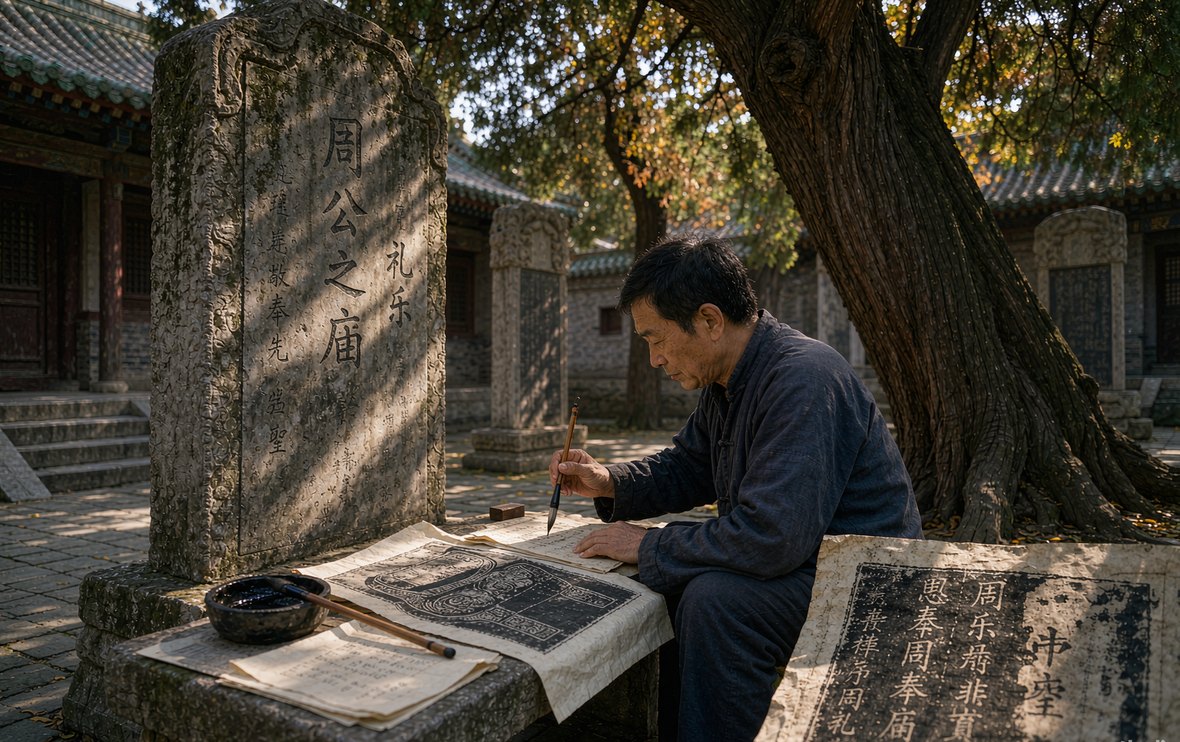
China’s earliest extant annalistic history, traditionally revised by Confucius from the archives of Lu, covering 242 years from Duke Yin’s first year to Duke Ai’s fourteenth. The whole book runs barely sixteen thousand characters, yet bears the heaviest brushwork. Its uniqueness lies in its "calligraphy": for the same deed, writing "killed," "murdered," or "executed" decides praise or blame at once; naming a lord "marquis" or "earl" turns on proper rank — hence "subtle words carrying great meaning" and "praise and blame seen in one character." Mencius judged: "When Confucius completed the Spring and Autumn Annals, rebellious ministers and unruly sons trembled" — a history book become an instrument of moral judgment. The text being too terse, three commentaries arose to gloss and expound it: the Zuo Commentary prizes events, the Gongyang and Guliang prize meaning; classic and commentaries together form the twin springs of Chinese historiography and classical learning.
The Annals record 242 years of events at fewer than seventy characters per year — terse almost to telegraphese. But the compression is the effort: for the same crime of killing a ruler, "the Heavenly King killed his younger brother Nianfu" states the guilt directly; regicides are written by name in censure, punishers of the guilty written as "executed" in praise; the lords of Wu and Chu styled themselves kings, yet the Annals still write them as "viscount" — refusing their usurped titles. Every choice of word is a verdict; the historian’s brush is a magistrate’s pen.
This "Spring and Autumn brushwork" established the moral dimension of Chinese historiography: the historian does not merely record what happened but judges what is right. The official histories of two thousand years, the remonstrances of censors, and even the modern idiom "Spring and Autumn brushwork" all descend from this — written praise and blame can bind power more durably than punishments. "Rebellious ministers trembled": not of the axe, but of the stroke awaiting them after death.
The classic too terse, commentaries had to unfold it, each a system of its own: the Zuo Commentary supplies narrative flesh on the Annals’ bones — Duke Zhuang’s defeat of his brother Duan, the battle of Chengpu, Zhu Zhiwu turning back the Qin army — all alive because of the Zuo; the Gongyang expounds sentence by sentence, founding the political philosophy of "grand unification" and the distinction of Hua and Yi; the Guliang glosses with strictness, prizing ritual and rank. In the Western Han the Gongyang flourished first — Dong Zhongshu built politics of Heaven-and-man upon it; from the Eastern Han on, the Zuo prevailed and the historiographic tradition grew strong.
The three-way dispute runs through Han classical scholarship, in essence a contest of three values: events, meaning, ritual-law. Reading the Annals today, none of the three can be spared — without the Zuo one sees no scene of history; without the Gongyang and Guliang one reads no praise or blame in the seams of the words. A classic of sixteen thousand characters raised a vast hermeneutic universe.
孔子成《春秋》而乱臣贼子惧。 — When Confucius completed the Spring and Autumn Annals, rebellious ministers and unruly sons trembled.——Mencius, "Teng Wen Gong II"
Confucius wandered fourteen years among the states; his Way unfulfilled, he returned to Lu and in old age withdrew to revise the Annals — "what should be written he wrote, what should be cut he cut; even Zixia and his fellows could not add a word." Mencius laid bare his intent: "The age decayed and the Way waned; perverse doctrines and violent deeds arose again... Confucius was afraid, and made the Spring and Autumn." As rites and music collapsed and governance failed, Confucius chose history as the last court of judgment: to weigh, one by one on the scales of the written word, two hundred forty-two years of rulers and ministers, fathers and sons, letting right and wrong travel with bamboo and silk to ten thousand generations.
For the first time in Chinese history, moral judgment passed into historians’ hands and the written word became the highest court. "Those who know me will do so through the Spring and Autumn; those who condemn me will do so through the Spring and Autumn" — Confucius knew he had overstepped the Son of Heaven’s power of reward and punishment, and trusted he had set the standard of right for ten thousand ages. The historian’s pride and burden were shouldered from then on: the tradition of the straight brush — the historians of Qi, the brush of Dong Hu — sung in Wen Tianxiang’s "Song of Righteousness," all draws its source from this small book.
The Annals’ distinctness is its double identity: as classic, a charter of value-judgment; as history, the fountainhead of year-by-year chronicle. Chinese historiography thus carries a double gene — seeking truth and seeking good, recording events and lodging judgments. The verdicts closing biographies in the Twenty-Four Histories, Sima Guang’s "Your servant Guang observes," and the value-concerns of modern historiography are all variations of Spring and Autumn brushwork.
Its mark on the language is deep too: "praise or blame in one character," "subtle words with great meaning," "the great duty of names and ranks" became idioms; the age itself became the symbol of "collapsed rites" and "contending for hegemony." Read two thousand years later, this shortest of histories still reminds the Chinese: the writing of history is never neutral archive but a moral document owed to descendants — how you record decides how posterity remembers.