Compiler
Dai Sheng (Western Han)
The comprehensive compendium of Confucian ritu...
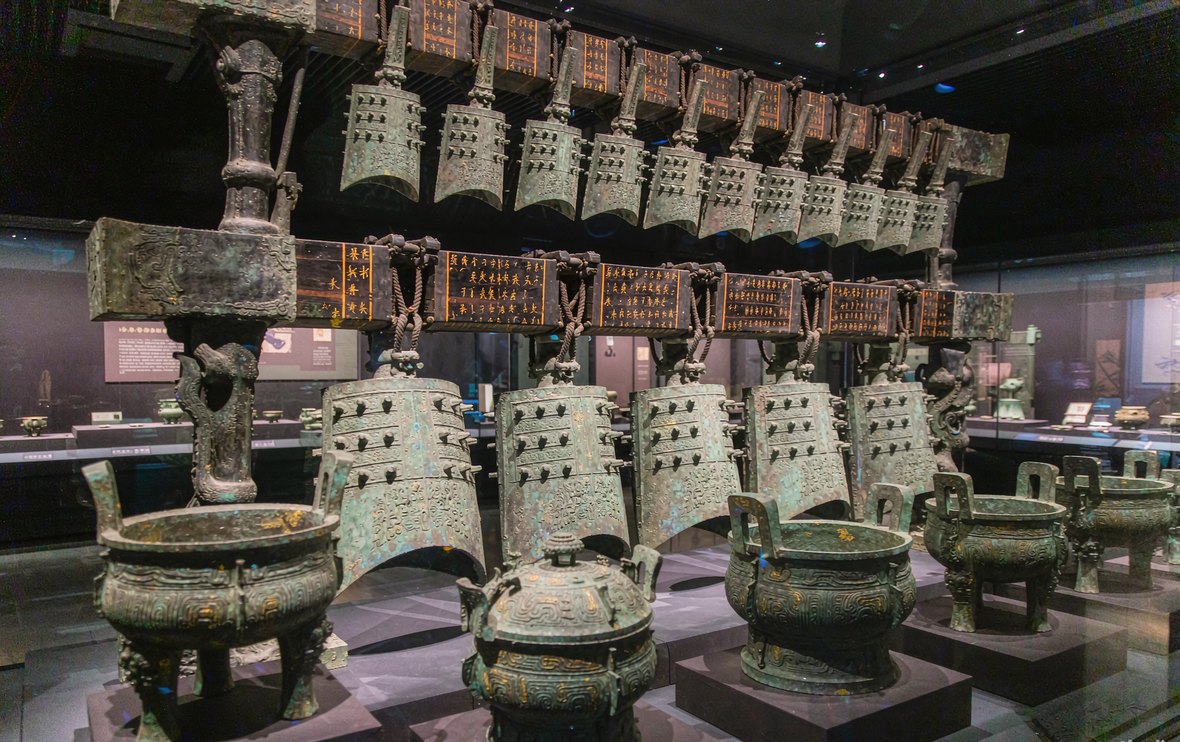
The comprehensive compendium of Confucian ritual learning — essays by Warring States and early Han scholars expounding the classics of ritual, compiled by Dai Sheng of the Western Han in forty-nine chapters, hence the "Lesser Dai Book of Rites." On its surface it teaches rites; in truth it teaches people: from the life ceremonies of capping, marriage, mourning, and sacrifice, to the human relations of father-son and ruler-minister, to the practical wisdom that "courtesy demands reciprocity" and "to study alone without friends is to be narrow and ill-informed," it explains the reason behind every formula of Chinese life. Zhu Xi drew out two chapters — the Great Learning and the Doctrine of the Mean — to join the Analects and Mencius as the Four Books, the textbooks of seven centuries of civil examinations under Yuan, Ming, and Qing: an essay collection on ritual thus rose to become a classic shaping the minds of East Asian literati. In today’s Chinese notions of courtesy, ideals of education, and family ethics, one can still hear the Book of Rites’ echo.
The Book of Rites differs fundamentally from manuals of ceremony in that it asks "why": the Ceremonial Rites tell you the thrice-applied cap of the capping rite and the weeping steps of mourning; the Book of Rites explains their meaning — "the capping is the beginning of ritual": the coming-of-age ceremony is an announcement of identity and an induction into responsibility; the grief of mourning, "the sorrowing heart, the aching mind," is true feeling welling up naturally — ceremony merely gives sorrow a habitable shape.
Hence its fundamental position: "Li is li (reason)" — ritual is not red tape but the outward form of the reason in human feeling; "in ritual follow what is fitting; as envoy, follow local custom" — ritual values appropriateness over pedantry. This doctrine of governing rite by meaning gives Chinese ceremony both formal dignity and a living spirit. Today’s saying "the gift is slight but the feeling is deep" is the colloquial version of the Book of Rites’ essence: the core of li has always been feeling and reason, not objects and forms.
Zhu Xi drew two chapters from the forty-nine, and they became the most dazzling twin stars of Chinese thought. The Great Learning sketches the master plan of self-cultivation in "three principles and eight steps": illustrating bright virtue, renewing the people, resting in the highest good as aims; investigation of things, extension of knowledge, sincerity of thought, rectification of mind, cultivation of self, ordering of family, governing of state, pacifying of all under heaven as the stair — "from the Son of Heaven down to the common people, all must take self-cultivation as the root." The Doctrine of the Mean probes the utmost — "before joy, anger, sorrow, and pleasure arise is called equilibrium; when they arise and all attain due measure is called harmony" — raising emotional fitness to cosmic law: "when equilibrium and harmony are realized, heaven and earth take their places and all things flourish."
One outward, one inward; one a map, one a gauge: the Great Learning gives the route of action, the Mean the inner standard. When the two were compiled with the Analects and Mencius as the Four Books, scholars of Yuan, Ming, and Qing recited them from childhood — the eight characters "cultivate self, order family, govern state, pacify the world" dissolved into East Asian readers’ blood, still the invisible gauge by which Chinese judge a person’s caliber.
大道之行也,天下为公。选贤与能,讲信修睦。 — When the Great Way prevailed, all under heaven was held in common; the worthy and able were chosen, and good faith and concord were practiced.——Book of Rites, "Liyun"
The Liyun chapter records Confucius sighing at a year-end rite, giving forth a famous passage: "When the Great Way prevailed, all under heaven was held in common. The worthy and able were chosen; good faith and concord were practiced. Thus people did not treat only their own parents as parents, nor only their own children as children; the old had a fitting end, the strong their use, the young their nurturing; widowers, widows, orphans, childless, the disabled and sick were all cared for." Shared resources, government by the worthy, social provision — this text of two millennia ago is among humanity’s earliest declarations of social ideals.
"Datong" (Great Harmony) became the general name of the Chinese utopia: Tao Yuanming’s Peach Blossom Spring is its literary variation; the Taiping Heavenly Kingdom, Kang Youwei’s Book of Great Harmony, and Sun Yat-sen’s "all under heaven held in common" stand on this spiritual lineage. Its enduring charm lies in its plainness: let the weak be cared for, the worthy have their place, the world practice good faith and concord. Perhaps never fully realized, it remains the yardstick by which every later age is measured.
The other half of the Book of Rites is a manual of living: the Quli teaches table manners and speech — rules at the meal minutely fine; the Neize records the order of elders and juniors and the rhythm of household days; the Xueji discusses education — "jade uncut is no vessel; a man unlearned knows not the Way," "teaching and learning further each other," "to study alone without friends leaves one narrow and ill-informed" — still maxims of pedagogy; the Yueji treats music and the human heart — "music is the harmony of heaven and earth; ritual is the order of heaven and earth."
This daily grammar seeped with the ritual tradition into every East Asian household: seating by seniority, the way of hosting guests, honoring teachers and valuing learning, careful mourning of the dead and remembrance of ancestors. Modernization has retired many ancient forms, but their inner core — respect for another’s place, solemnity at life’s junctures, faith in learning — still runs. One may say the Book of Rites records not just old rites but the underlying logic of how the Chinese organize life.