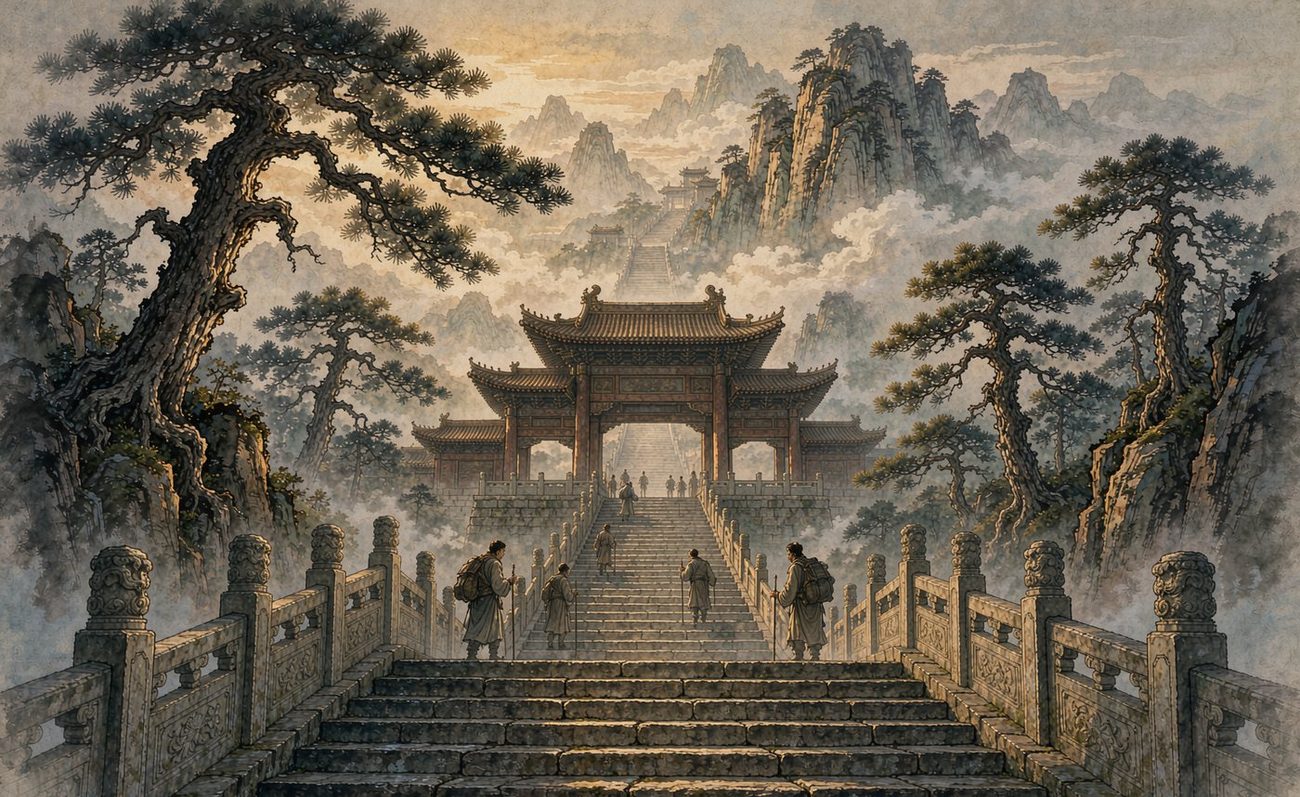
Chinese aesthetics was born in mountains and waters. The ancients poured their feelings into peaks, lakes and seas, writing nature into the soul of poetry and painting.
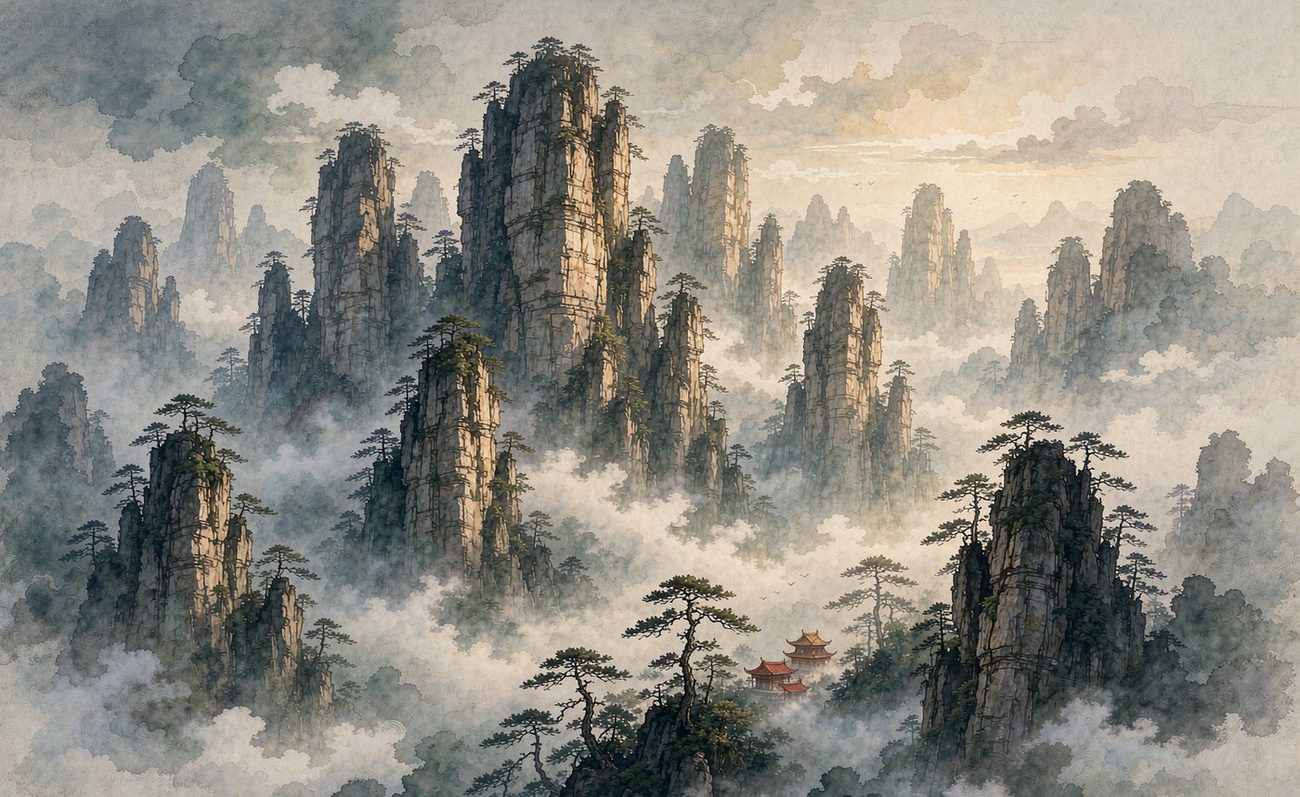
Pillars of stone raised by tectonic forces hundreds of millions of years ago — a fairyland that seems to have appeared out of thin air.
Three thousand quartz-sandstone pillars spear into the sky — the inspiration for the floating mountains of Avatar. When mist fills the valleys the peaks drift like islands in a sea of cloud, a landscape belonging to no school of painting on earth.
A rare quartz-sandstone pillar forest, a fantasy landscape stepped straight out of a Chinese painting.
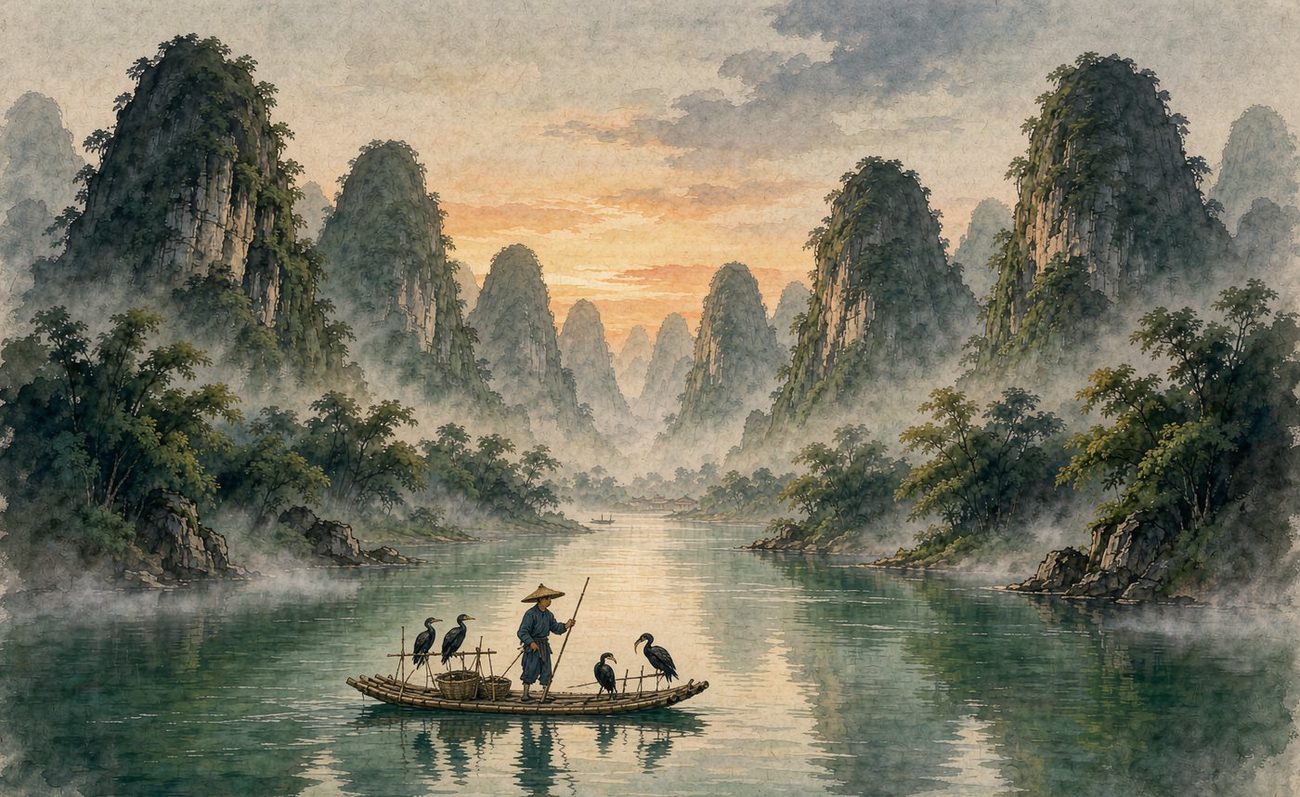
One line — the rivers and hills of Guilin are the finest under heaven — captures the unique poetry of karst scenery.
Han Yu praised it in verse: “The river a girdle of green silk, the hills hairpins of jade.” From Guilin to Yangshuo the Li runs eighty-three kilometres, its karst peaks massed along both banks like a fleet of sails — the Chinese landscape painting brought to life.
The exemplar of karst waterscape, the classic symbol by which the world pictures Chinese landscape.
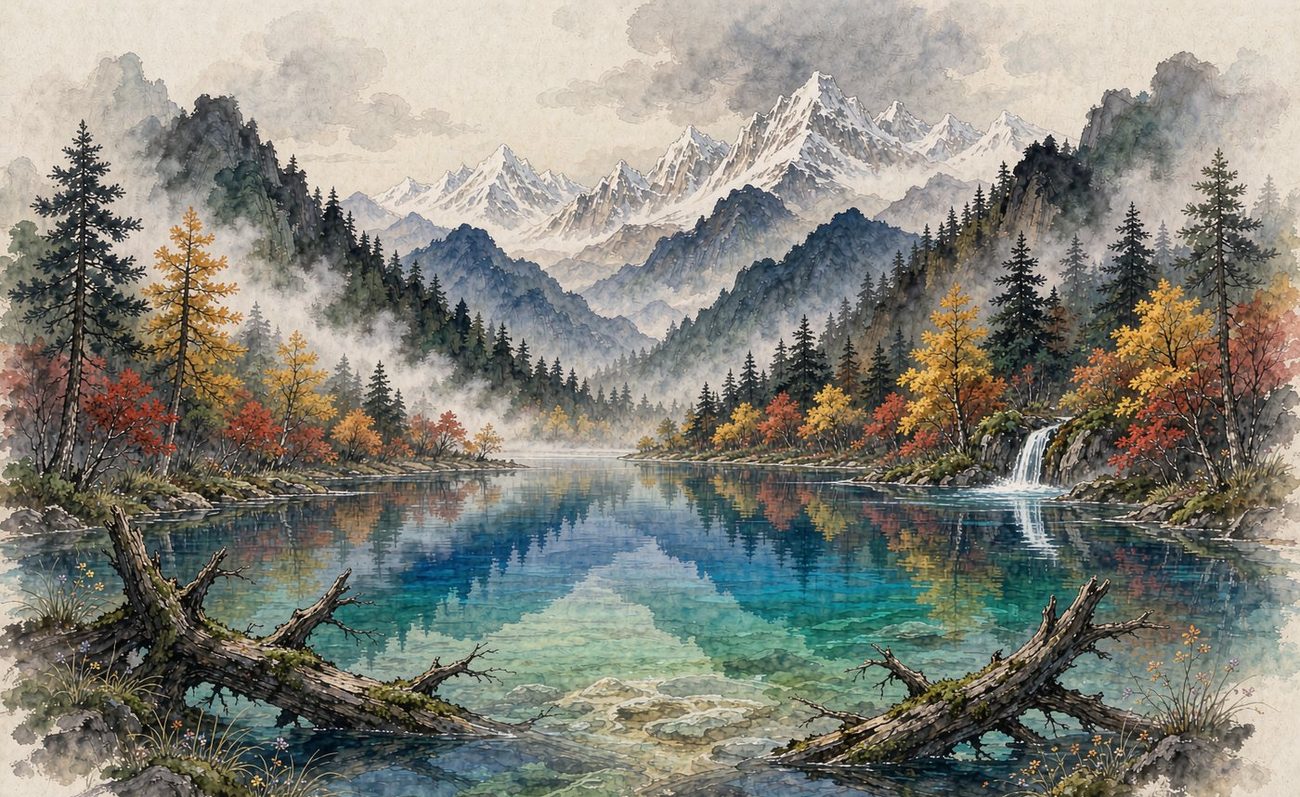
Snow peaks, colored forests and turquoise lakes interweave — nature mixing its most dreamlike palette.
More than a hundred alpine lakes terrace down beneath the snow peaks, their water shifting through peacock blue, jade green and amber as the light changes. In Tibetan they are called haizi, “sons of the sea” — an ocean scattered across the highlands.
A cluster of travertine lakes; the water itself is a wonder rarely seen on earth.
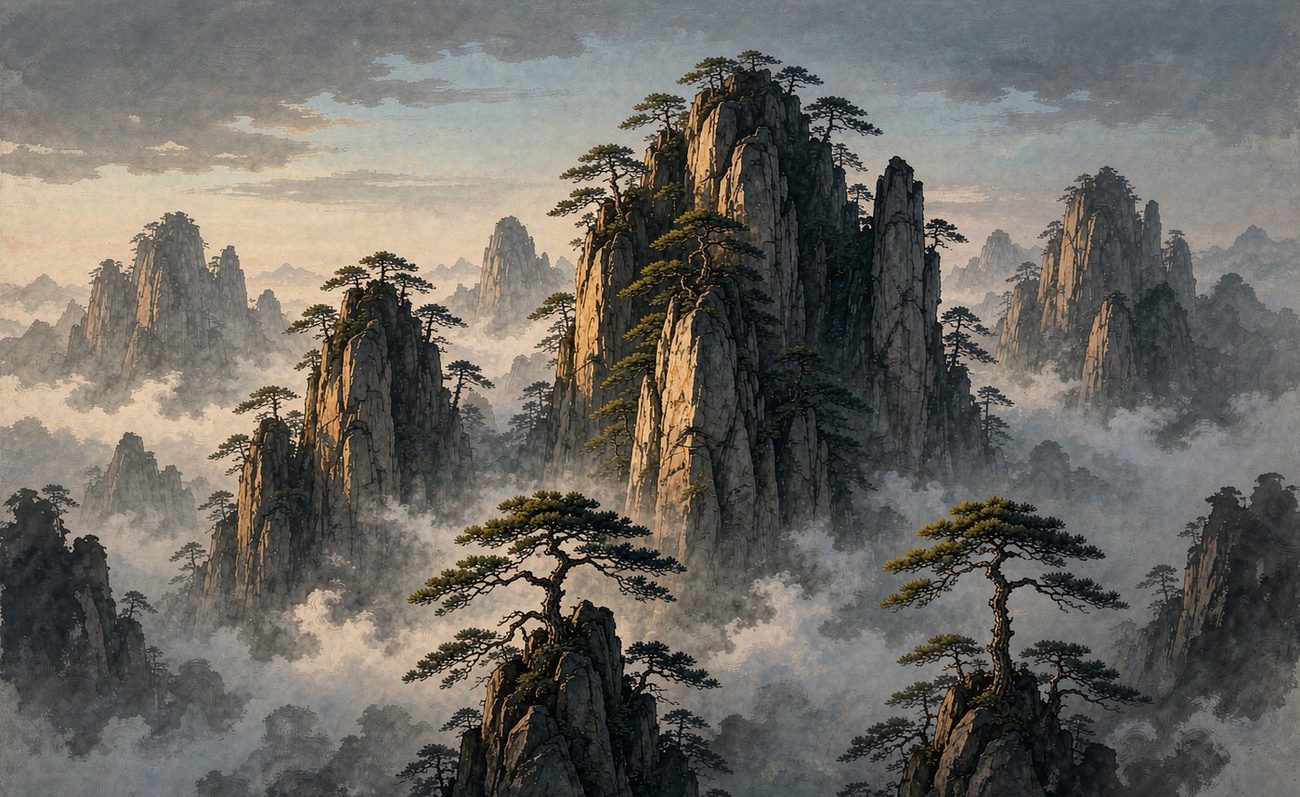
Pines, rocks, clouds and springs live together; literati and painters have made pilgrimages here for centuries.
Xu Xiake climbed Huangshan twice and declared: “Having climbed Huangshan, there is no other mountain under heaven.” Its seventy-two peaks rise sheer from the earth, and its Four Wonders — gnarled pines, weird rocks, seas of cloud and hot springs — make it the high point of Chinese landscape aesthetics.
Famed for its sea of clouds and legendary pines, the prototype of Chinese landscape painting.
The sacred mountain where emperors performed the fengshan sacrifices, carrying the reverence of Huaxia for heaven and earth.
First of the Five Sacred Mountains and the site of the emperors' fengshan sacrifices. Du Fu's line — “When I reach the summit, all other peaks will seem small” — says all there is to say about Mount Tai's place in the Chinese mind: not the highest, but the heaviest with meaning.
A sacred mountain you can climb — reach the summit and watch the sun rise.