Search
Search
🌐 LanguageEnglish中文
Home The Shape of China Landscapes Roots of Civilization Folk Culture Oriental Arts Epic & Thought TCM Wellness
Home / Epic & Thought / Mind & Self-Cultivation
Section V · Chapter III · Epic & Thought

Mind & Self-Cultivation

Mind & Self-Cultivation

Seeking inward: systems of spirit for settling the self.

01

Chan (Zen) BuddhismBuddhism

Chinese-style wisdom of sudden awakening: not clinging to words, pointing straight at the mind itself.

Buddhism entered China at the turn of the Common Era and, in collision with Confucianism and Daoism, produced Chan (Zen) — the most thoroughly Chinese form of Buddhism. When Chinese speak of yuanfen (fated affinity), fangxia (letting go) or pingchangxin (an ordinary mind), they are speaking Buddhism's everyday legacy.

A major sinicized branch of Buddhism, shaping literati aesthetics and the philosophy of life.
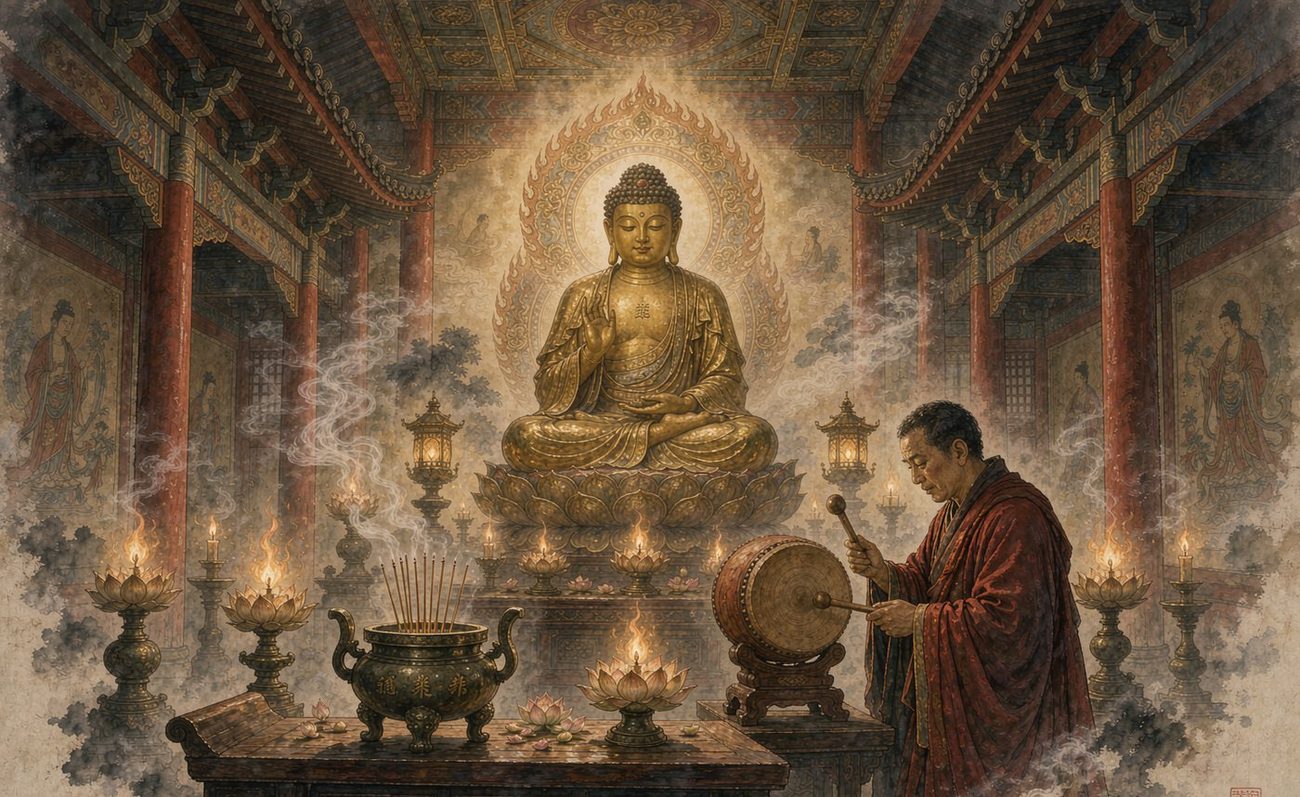
禅宗
禅宗
Read the full entry “Chan (Zen) Buddhism” →
02

The Platform Sutra

The only sutra of Chinese origin: see the nature and know the mind — anyone may awaken by themselves.

The recorded teaching of Huineng, the Sixth Patriarch — "the Buddha-dharma is in the world; awakening is not apart from the world."

Read the full entry “The Platform Sutra” →
03

Neo-Confucianism

Investigate things to exhaust their principle; keep principle and put away desire — building the inner order of the scholar-official.

Fusing Confucianism, Buddhism and Daoism, it shaped the spiritual world of the literati after the Song and Ming.

Read the full entry “Neo-Confucianism” →
04

The School of Wang Yangming

Knowledge and action are one; extend the innate knowing — awakening the power of initiative and the heart itself.

Founded at Wang Yangming’s Longchang awakening; carried to Japan it lit the spirit of the Meiji reformers.

Read the full entry “The School of Wang Yangming” →
← Previous chapterHistory & Order Next chapter →Inquiry & Craft