Founder
Wang Shouren (Master Yangming, 1472–1529)
The School of Mind founded by Wang Shouren (Wa...
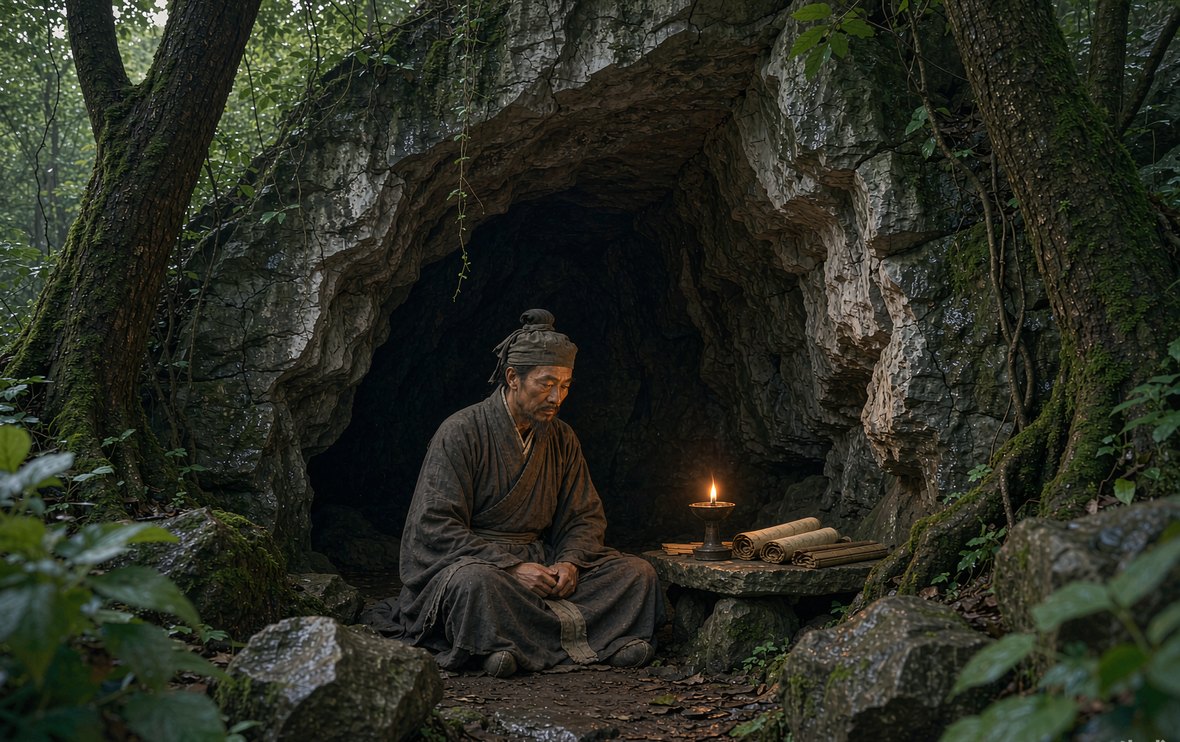
The School of Mind founded by Wang Shouren (Wang Yangming, 1472–1529) of the Ming — the most action-driven learning in the history of Chinese philosophy. Wang Yangming was an all-around figure: a jinshi by examination, the general who put down the Prince of Ning’s rebellion, a punished exile at the Longchang post station — and it was there, in a stone coffin amid Guizhou’s wilderness, that the great awakening came: "The way of the sage is complete in my own nature." His teaching turns on three propositions: the mind is principle (truth lies not in things but in the heart itself); knowledge and action are one (true knowledge necessarily issues in action); extending innate knowing (everyone carries a ready-made judge of right and wrong within). This learning pushed Confucianism from the study into the battlefield and daily life, awakened the universal confidence that "everyone can become a sage," shaped the intellectual liberation of the mid-late Ming, and, carried to Japan, became the spiritual spark of the reformers. "This heart is luminous — what more is there to say?" — the eight dying characters are the best gloss on his philosophy.
In 1508 Wang Yangming offended the eunuch Liu Jin by petitioning for the rescue of censors, was beaten forty strokes, and was demoted to head the Longchang station in Guizhou — a miasmic land, his attendants all sick, no fixed dwelling. He hewed himself a stone sarcophagus and sat in it day and night awaiting death — until one day the great awakening came: "I now know that the way of the sage is complete in my own nature; to seek principle in external things was my error." The bewilderment of years spent "investigating bamboo" for principle outside was overturned in extremity: truth need not be sought without — my own mind is it.
Why the Longchang awakening moves us: it is philosophy verified with life — rank gone, life on the line, every external prop stripped away — what remains? The way of the sage depends on no external condition: an answer gripped by hand in the wilderness. From then on his learning always carried that tested, "in-affairs" confidence: teaching, suppressing revolts, enduring slander, never shaken. True philosophy grows out of living — Wang Yangming is that rare Chinese thinker who demonstrated knowing and doing in one person.
"Knowledge and action are one" was aimed at the Ming study-sickness: knowing is one thing, doing another; scholars mouthed the sages’ words and lived otherwise. Wang Yangming declared: "There has never been one who knows yet does not act. To know and not act is simply not yet to know." To know filial piety and not practice it is not truly to know it; "to know pain, you must have felt pain yourself" — knowledge must penetrate to the body, or it is hearsay.
This strong medicine still fits across five hundred years: however many principles you understand without acting, you do not understand them. "Knowledge is the beginning of action; action the completion of knowledge" — knowing and doing are two faces of one thing; to debate "knowledge first or action first" is already to split one thing in two. When modern Chinese reread Yangming, it was for this power to move: Chiang Kai-shek revered him all his life; Japan’s Togo Heihachiro carried the seal "whole life bowed in worship to Yangming" — what the School of Mind is remembered for is its power to ignite action.
此心光明,亦复何言。 — This heart is luminous — what more is there to say?——Wang Yangming’s dying words
In his late years Wang Yangming condensed all his teaching into two words: liangzhi (innate knowing). Liangzhi is "the sense of right and wrong, known without deliberation, able without learning" — see father, and filial piety arises of itself; see a child at the well, and alarm arises of itself. It is the mirror and judge each of us carries in the breast: "that bit of liangzhi is your own rule." The whole discipline is in "extending" it: in every affair, do not deceive this knowing but act by it; selfish desires are dust — wipe them hour by hour — "extend my mind’s innate knowing to each thing and affair."
This is perhaps the most democratic philosophical declaration of the Ming: the way of the sage is not sought outside — it is ready in everyone — "the streets are full of sages." It opened sagehood to all, turning the learning of the sages from temple scripture into each conscience’s self-legislation. This direction of inner freedom shaped the Taizhou school ("the commoners’ daily life is the Way"), the Enlightenment at Ming’s fall, and modern Neo-Confucianism — after Yangming, the Chinese heart was, for the first time, granted such sovereignty.
Yangming’s learning is grounded in "grinding on affairs": he spurned empty talk and tested the heart in concrete tasks — quelling the bandits of southern Jiangxi, capturing Prince Ning (Zhu Chenhao) at Poyang Lake — the outward practice of "defeating the bandits in the heart." After that victory he was himself framed, in mortal danger; he took it calmly — "this heart is luminous; what more is there to say?" Asked at death for final words, he answered with the same eight characters — a lifetime’s philosophy completed in eight.
His influence crossed the sea: Nakae Toju founded Japanese Yangmingism; Kumazawa Banzan, Sato Issai, Yoshida Shoin, and Saigo Takamori were all his heirs; the spiritual fuel of the Meiji reformers’ "revere the emperor" drew largely on Yangming. In modern China, Kang Youwei, Liang Qichao, and Sun Yat-sen felt his call too — one philosophy serving as the spiritual resource of two nations’ ages of change is rare in world thought. "The bandits in the hills are easy; the bandits in the heart are hard" — the lesson Yangming left every age has never let out class.