Time
Dai New Year, mid-April
The Water-Splashing Festival is the greatest t...
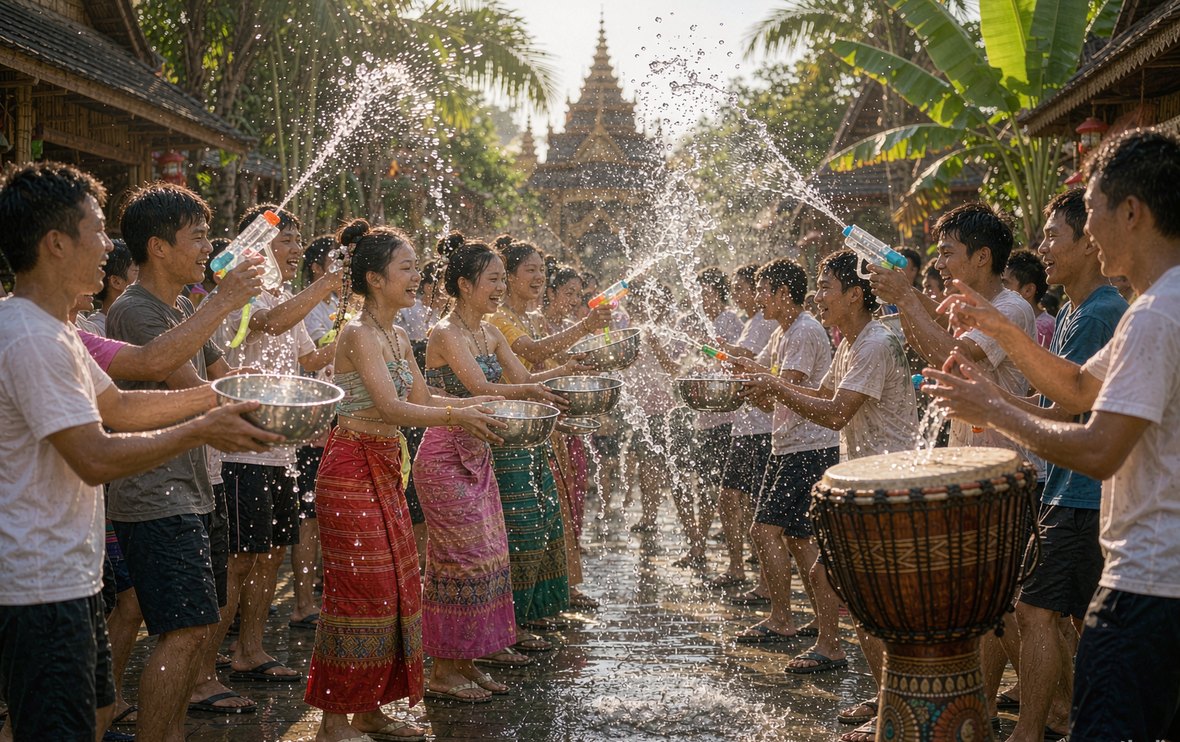
The Water-Splashing Festival is the greatest traditional festival of the Dai (the Dai New Year, in mid-April), and is shared by the Deang, Achang, Blang and Wa. People pour clear water over one another to wash away the dirt of the old year and bless the new: "soaked once, blessed for life". It runs three to five days: bathing the Buddha, piling sand stupas, boat races, launching homemade rockets, the market fair with its song and dance, sky lanterns rising, and the water fight that lifts it all to a peak. To the sound of elephant-foot drums and gongs, men and women dip leaves in water and sprinkle it gently on their elders in respect, while the young use water to speak of love — water is both blessing and language. The festival joins the Theravada Buddhist rite of bathing the Buddha with Dai water culture, and has been national intangible heritage since 2006. Xishuangbanna and Dehong draw millions of visitors each year — a carnival in the name of water that turns blessing into a gesture the whole world understands.
The festival is the Dai New Year, sangkran, falling around 13 to 15 April. The Dai calendar begins its year in the sixth month, at the end of the dry season and the approach of the rains, so welcoming the year with water follows the logic of the season. The religious frame is the Theravada rite of bathing the Buddha: the image is brought out, washed with scented water, monks chant, the faithful pile sand stupas and offer flowers — cleansing the body before cleansing the heart, bathing the Buddha before bathing one another.
Dai water culture runs on the same frequency: water is holiness and the source of life, "let the water fly and the Dai flourish" — that the greatest festival of the year should be named for water is the most natural choice a river people could make.
The splashing has its manners. Dipping leaves and sprinkling the shoulders and back of an elder with clear water while speaking a blessing is respect; ladling water from a silver bowl and chasing one another is play; in the carnival itself, "soaked once, blessed for life" — the wetter you are, the more blessing you have received. Young men and women speak through water: to splash you is to like you — water becomes the most public and most discreet of love words.
This grammar makes the festival a rare occasion on which everyone blesses everyone: there are no spectators, each person gives blessing and receives it, and the carnival dissolves every boundary of status — the equality of water accomplished as custom.
Daylight is just as heated. Boat races are held on the Mekong and the Ruili River, paddlers shouting in unison, the boats arrow-straight; launching the "high rise" is a Dai speciality — a bamboo tube packed with powder flies up trailing smoke, and the higher it goes the better the omen, ten thousand faces turned up to cheer. At the fair, elephant-foot drum dance, peacock dance and zhangha singing follow one another; at night sky lanterns fill the dark — three days scheduled full of every sound and light.
The peacock dance reached the world stage through Yang Liping's Spirit of the Peacock, and zhangha singing is national intangible heritage: the artistic endowment of this festival long ago overflowed the festival itself.
The festival has outgrown an ethnic celebration to become a regional cultural card: the splashing squares of Gaozhuang in Xishuangbanna and Mangshi in Dehong fill with crowds each April, and overseas visitors come expressly for it. Thailand's Songkran is cognate and structurally similar, and the Mekong basin shares this water new year — a cross-border carnival circle of the East has taken shape.
The festival shows the warmest face of water culture: in an age that is said to be short of love, people use the most primitive medium, water, to bless without distinction. Water thrown cannot be recalled, and neither can a blessing given.