Date
Between 4 and 6 April
Qingming is the only day in China that is at o...
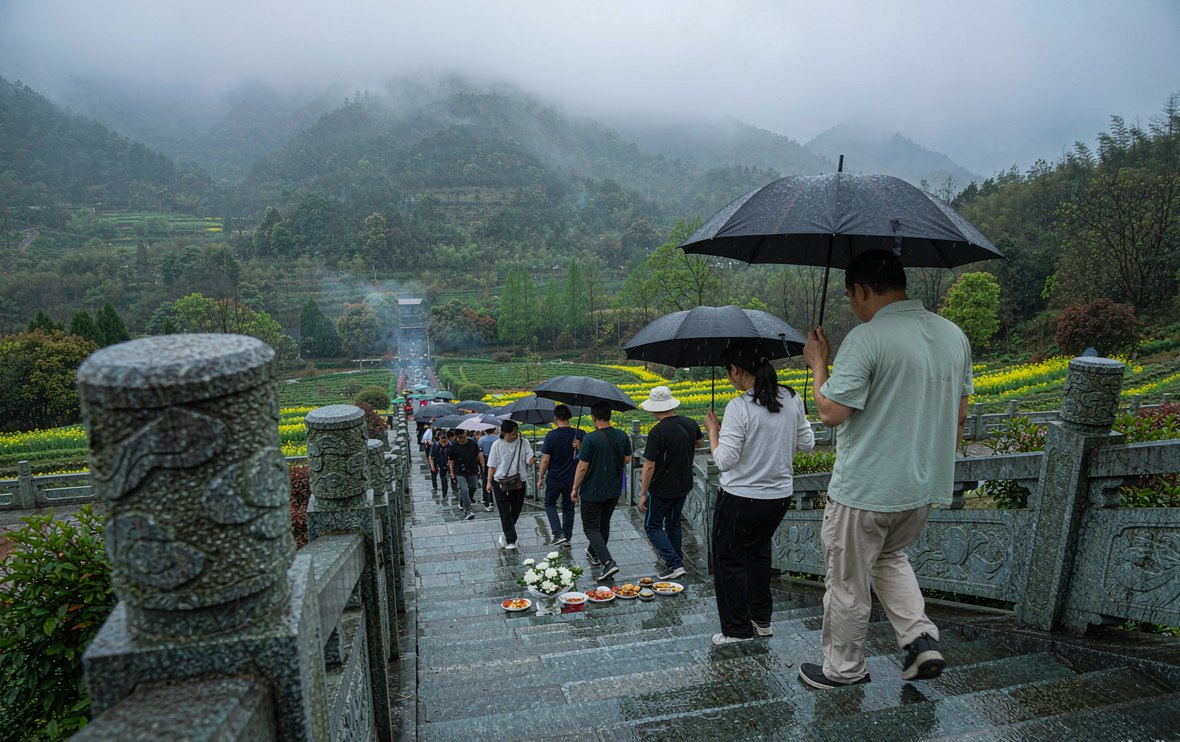
Qingming is the only day in China that is at once a solar term and a major festival. On one hand "all things are made fresh at this season", and it is the proper time for spring ploughing and spring outings; on the other it is the day for remembering the dead and sweeping ancestral graves — mourning the departed while embracing the spring, death and nature sharing a single festival. Qingming absorbed the ancient spring sacrifice and the Cold Food festival, with its tale of Jie Zitui and its ban on fire and cold meals, and by Tang and Song it had settled into a double theme of tomb-sweeping and spring walking. In Du Mu's apricot-blossom rain there are both the heartbroken traveller and the wineshop in the apricot village. Willow sprigs, swings, kite-flying and football went alongside the graveside rites. The Chinese attitude to death is never clearer than at Qingming: remembrance without wallowing, grief and vitality together. It entered the first national list of intangible heritage in 2006 and became a public holiday in 2008.
Qingming was originally a solar term at the meeting of mid- and late spring; its festival functions came chiefly from the Cold Food festival. Legend has it that Duke Wen of Jin forbade fires and required cold food for a month in memory of Jie Zitui, later reduced to three days. By Tang and Song, tomb-sweeping at Cold Food was established practice, and the two neighbouring dates gradually merged; by Ming and Qing they were one, the cold-food custom faded, and the composite form of grave-sweeping plus spring outing took shape — a textbook evolution of festival merger.
The story of Jie Zitui, who cut flesh from his own thigh to feed his lord and then refused all reward, gave the day its moral undertone of loyalty and integrity. The two characters qing ming mean both "clear and bright" and a clear, bright character: one festival settles nature and ethics at once.
The rite unfolds in layers: weeds cleared and fresh earth added, offerings set out, incense burned and wine poured, bows made — the core is sincerity, "sacrificing as if the ancestors were present". Burning paper money expresses the care that "serves the dead as one serves the living"; today flowers, online memorials and commissioned sweeping answer the realities of fire risk and distance. Zengzi said: "Let the end be cared for and the distant remembered, and the people's virtue will grow substantial." Ancestral rites were never merely ritual but the yearly lesson in family memory and ethics.
The scope of remembrance has widened too: public ceremonies at martyrs' cemeteries, commemorations at shrines of the worthy — the memory of the family extended into the memory of the nation. The history of Qingming is the history of how the Chinese confirm where they come from.
Spring outings at Qingming were once called "visiting spring" and "seeking spring"; Along the River During Qingming is a record of exactly this, the crowds of Bianjing on both banks of the Rainbow Bridge. Swinging, known as "the half-immortal game", kite-flying to let misfortune fly away, football and tug-of-war — spring revived in the body. Willow twigs were worn and hung, both as remembrance and as protection: "wear no willow at Qingming, and a fair face turns white" runs the proverb, half joking, half in earnest.
Grief and outing look contradictory but are a deep wisdom: flying kites and watching new green on the earth where the ancestors sleep — life and death in one frame without cancelling each other. Mourning is completed by living well. This folk expression of "living toward death" is more direct than any philosophy.
Qingming became a public holiday in 2008, and the homeward journeys of hundreds of millions for grave-sweeping became a periodic migration rarely seen elsewhere on earth. Ecological burials, flower offerings and online platforms are finding a new balance between ritual and environmental care. The day remains an agricultural coordinate as well: "around Qingming, plant melons and beans", and tea farmers race to pick the pre-Qingming leaf — the productive meaning of the term still runs.
Its contemporary lesson is that it preserves a speed bump in a fast life: every April the Chinese are reminded by a festival to stop, to return to the land, to the ancestors, to the scene of spring. Grieve without injury, remember without arrest — this attitude to time is the deepest cultivation that custom can give.