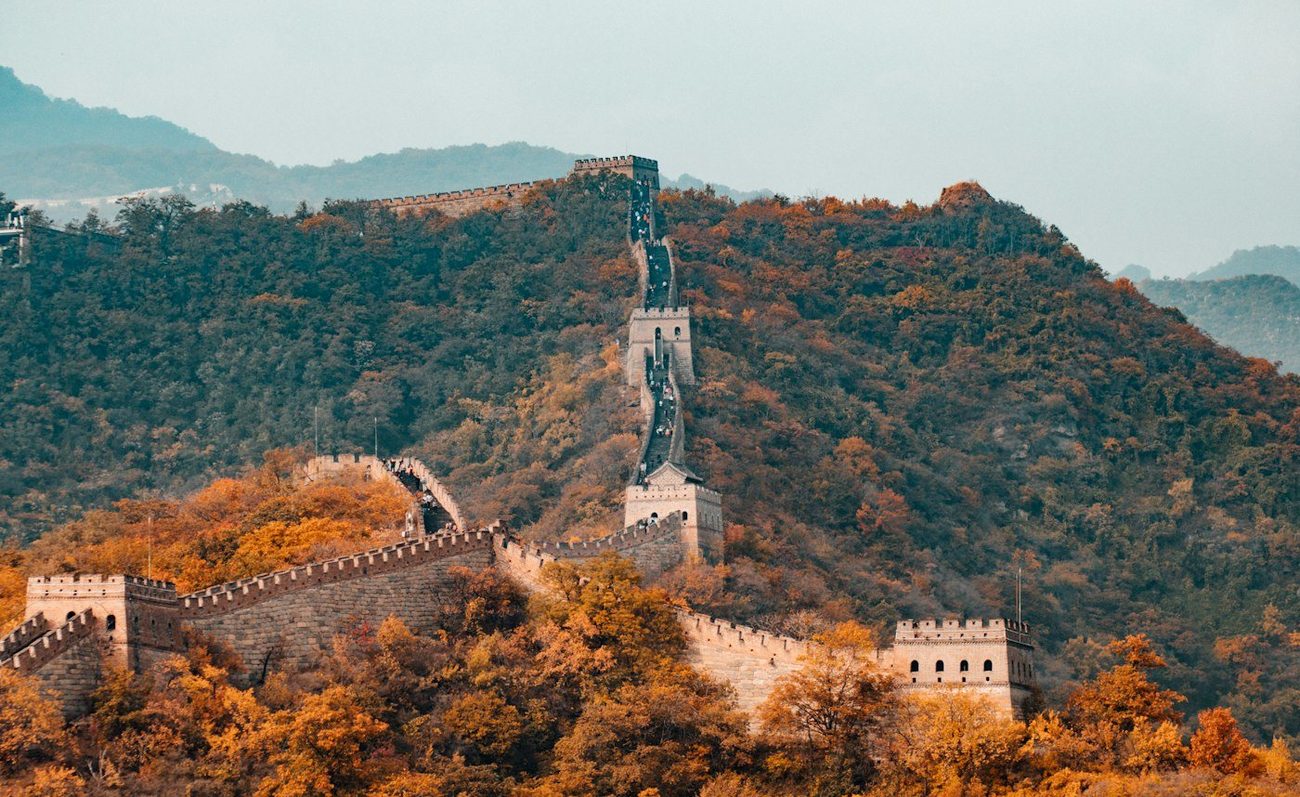
The Great Wall is no simple rampart: it is a border where farming and nomadic civilizations collided for two thousand years.
From Shanhaiguan to Jiayuguan, more than twenty thousand kilometres of wall and passes, built and rebuilt over two thousand years. The Great Wall is not a wall but an epic of Chinese defence — and of the Chinese mind — written along the mountain ridges.
A frontier epic spanning two millennia, the largest military defense project on earth.
Ancient dynasties built an imperial order you could see: palaces and altars froze imperial power, rites of heaven and earth, and the ethics of family and state into monumental architecture.
The Forbidden City was the seat of governance; the Temple of Heaven and Temple of Earth received sacrifices of heaven and earth in square and round forms. Together, palaces and altars formed the spatial symbolism of empire — the highest material expression of dynastic ritual.
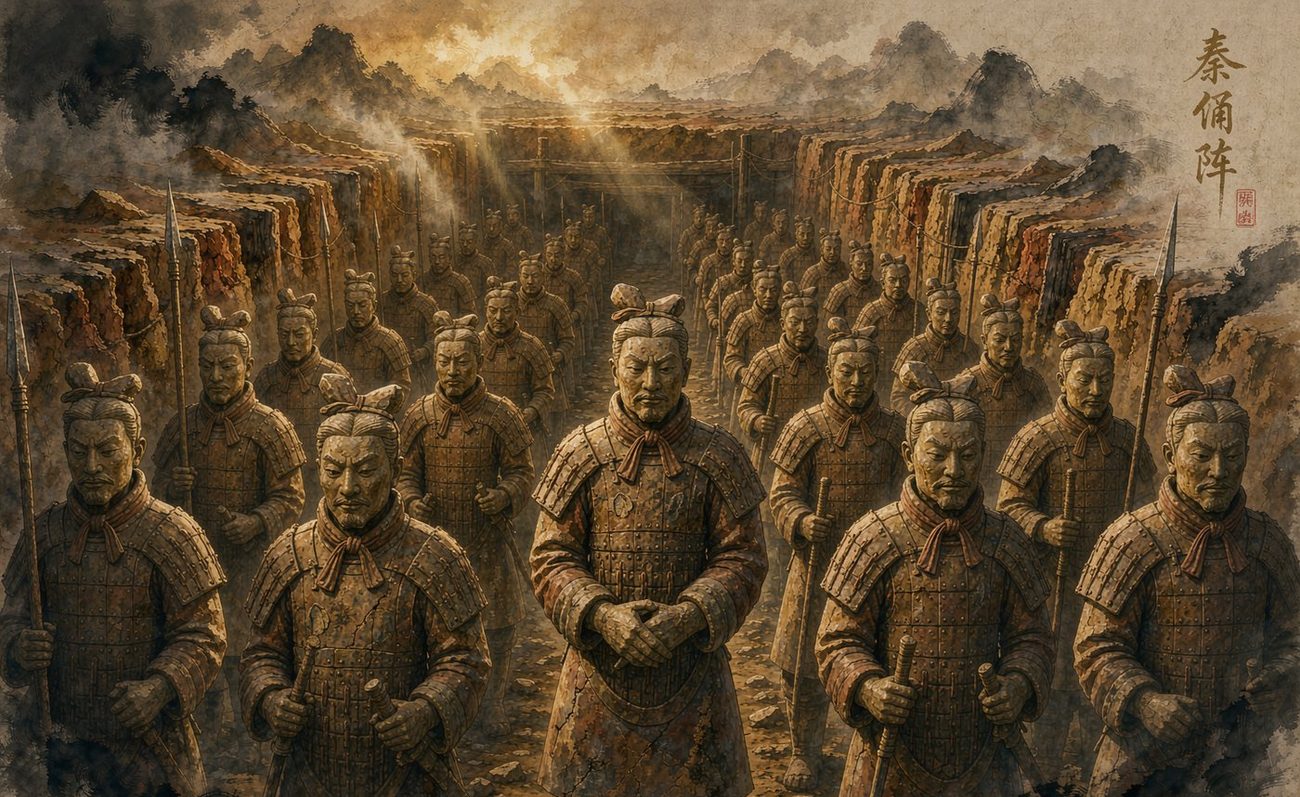
A legion buried underground for more than two thousand years, recalling how the Qin empire swept away the six kingdoms.
More than eight thousand clay soldiers, no two faces alike, have guarded the tomb of the First Emperor for twenty-two hundred years. One spadeful turned by a farmer digging a well in 1974 woke the Eighth Wonder of the World.
An underground army two millennia old, hailed as the eighth wonder of the world.
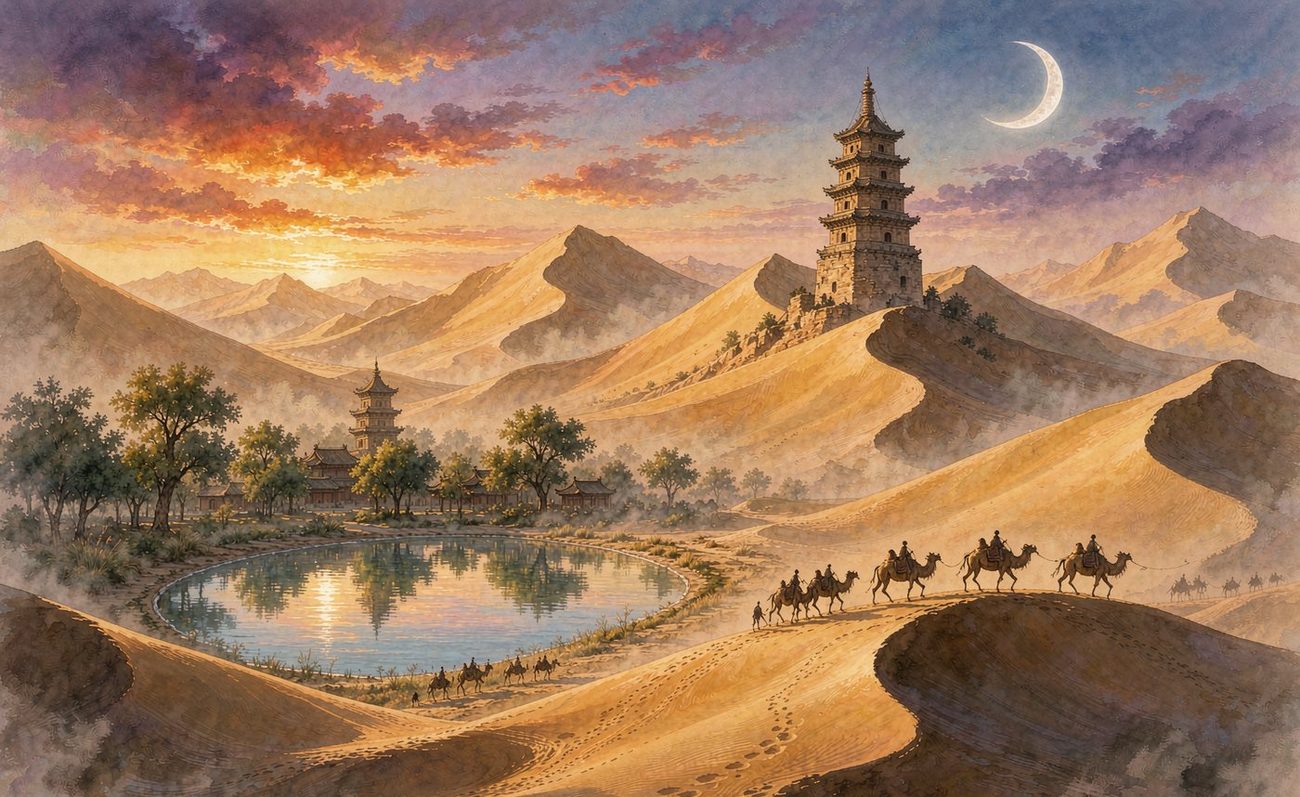
A thousand-year cave complex in the desert where Silk Road civilizations met, its painting and sculpture spanning more than ten dynasties.
Desert, oasis, a thousand years of cave shrines and a crescent-shaped spring. Dunhuang was the crossroads of the Silk Road, where four civilizations met — its name means “blazing splendour.”
A treasury of Buddhist art on the Silk Road, preserving murals and statuary across a millennium.