Location
southwest China, Qinghai and Tibet
The Qinghai-Tibet Plateau — average elevation ...
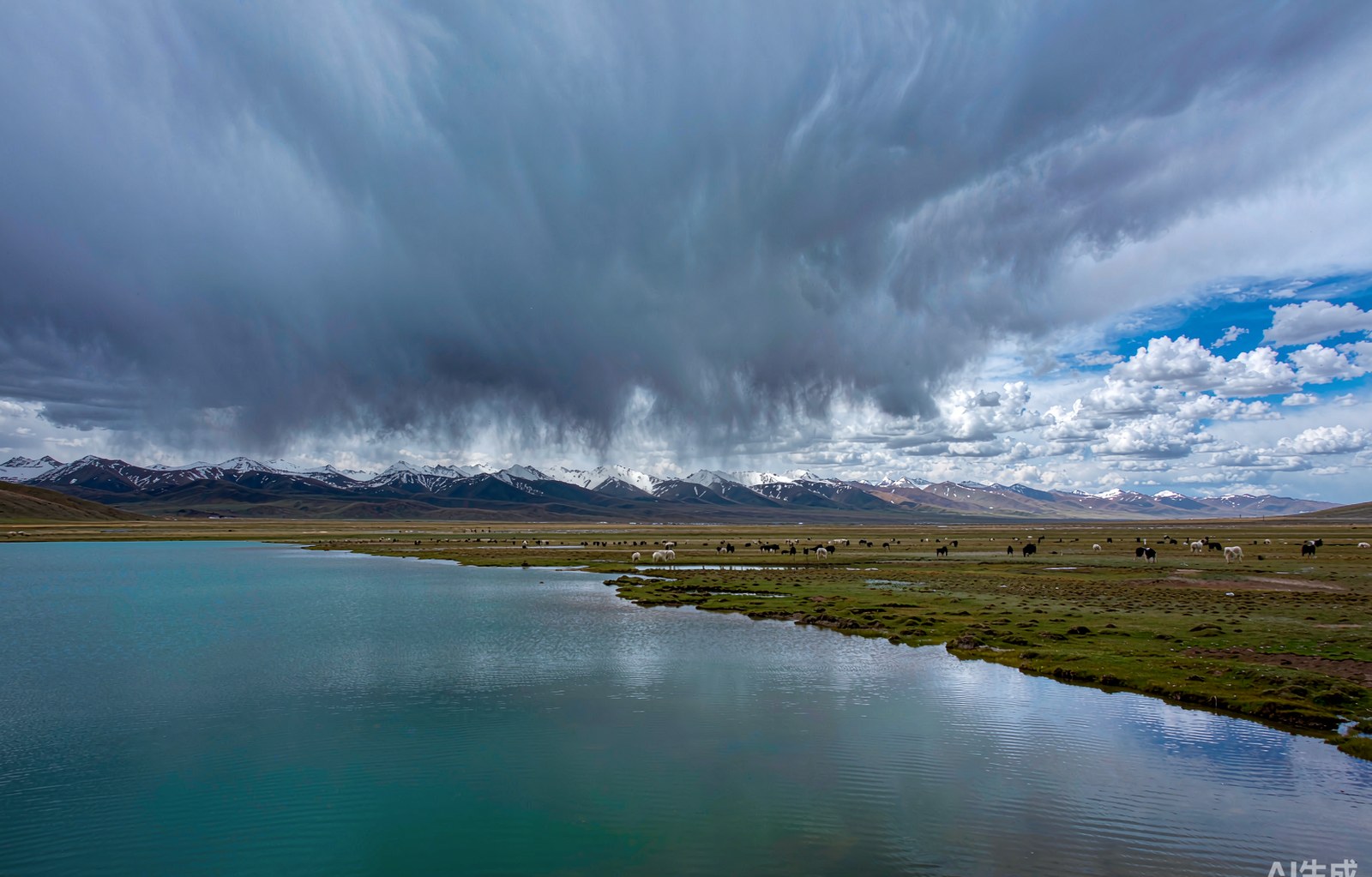
The Qinghai-Tibet Plateau — average elevation above 4,000 meters, area of 2.5 million square kilometers — is the highest and youngest great plateau on earth: the Water Tower of Asia, source of the Yangtze, the Yellow River, the Lancang-Mekong, the Yarlung Tsangpo, the Ganges and the Indus. Its rise reshaped the landforms and monsoon climate of East Asia, and it nurtured a highland civilization without parallel.
Some fifty million years ago the Indian plate struck the Eurasian plate, the Tethys Sea closed, the crust shortened and thickened on a vast scale, and the Qinghai-Tibet Plateau rose rapidly — a process still under way, with Mount Everest gaining millimeters each year. The plateau's uplift redrew the climate of Asia: it strengthened the East Asian monsoon, made the Taklamakan arid and laid down the Loess Plateau — a "geographical event that changed the history of the earth."
The plateau nurtures nearly all the great rivers of Asia — the Yangtze, the Yellow River, the Lancang-Mekong, the Yarlung Tsangpo-Brahmaputra, the Ganges, the Indus, the Tarim — and its glacier reserves are the largest in the middle and low latitudes, hence "the Water Tower of Asia." Lake Manasarovar is held sacred by several religions; Qinghai Lake is China's largest lake; Namtso, the "Heavenly Lake," is blue as a gem — the plateau gives its water to all around it in the purest form.
明月出天山,苍茫云海间。 — "The bright moon rises from the Heavenly Mountains, lost in a vast and boundless sea of cloud."—— Li Bai, "Moon over Guanshan" (Tang dynasty)
Life on the plateau has evolved astonishing adaptations: Tibetan antelope have migrated seasonally for millions of years; kiang, snow leopard and black-necked crane live here; highland barley grows at the 4,000-meter limit of cultivation, staple grain of the plateau civilization. Zhang Zhung and the Tibetan Empire rose in turn; Tibetan medicine, astronomy and calendrical calculation, and the Epic of King Gesar are systems of their own. Today the Qinghai-Tibet Railway and the Sichuan-Tibet highways cross the Roof of the World — the "Third Pole" is no longer unreachable.