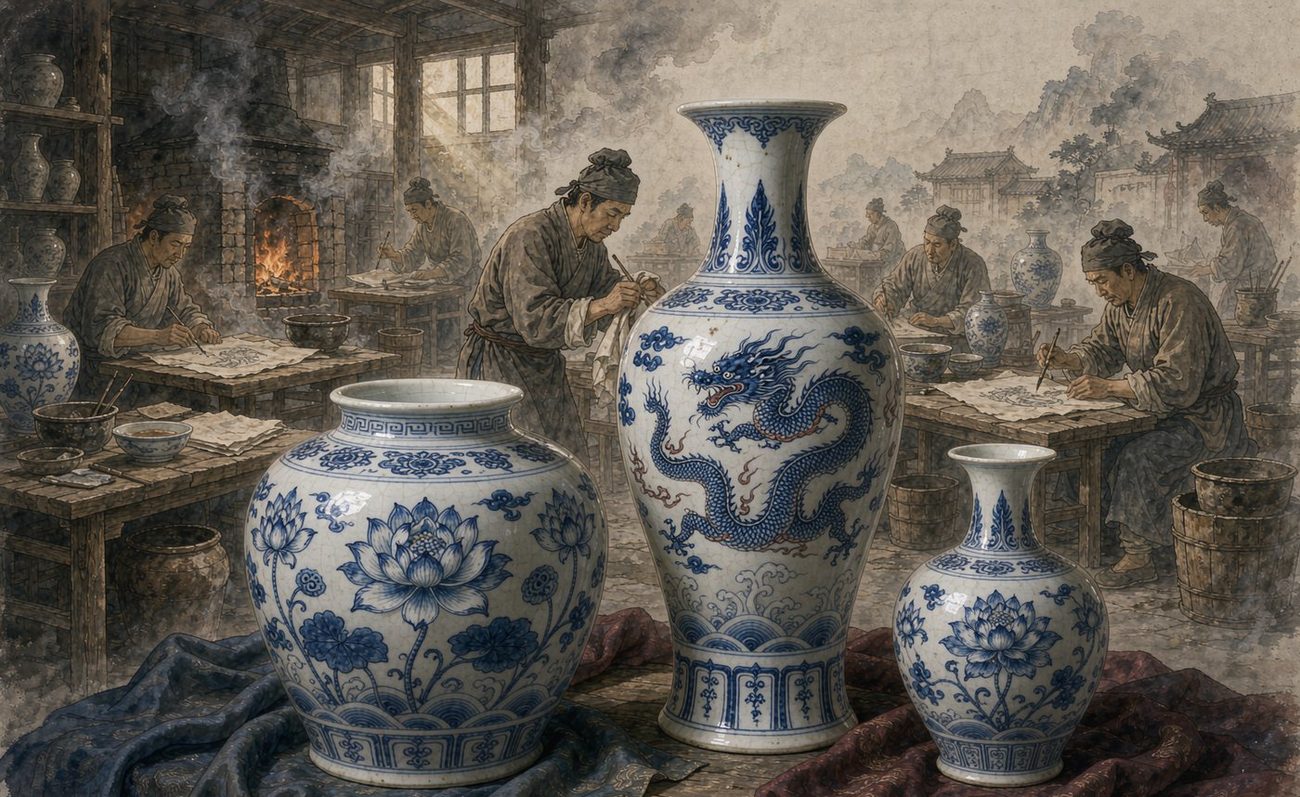
The art of clay and fire across millennia: from coarse earthenware to celadon and white porcelain, carrying Eastern taste and daily life.
China fired mud into a language the world could read: the brilliance of Tang sancai, the restraint of Song ware, the elegance of blue-and-white. In English “china” means both the country and its porcelain — ceramics are China's calling card.
Born in Neolithic pottery and crowned by the famous kilns of Tang and Song — Longquan celadon as the summit of the art; its forms, glazes and patterns evolved into vessels both daily and world-renowned.
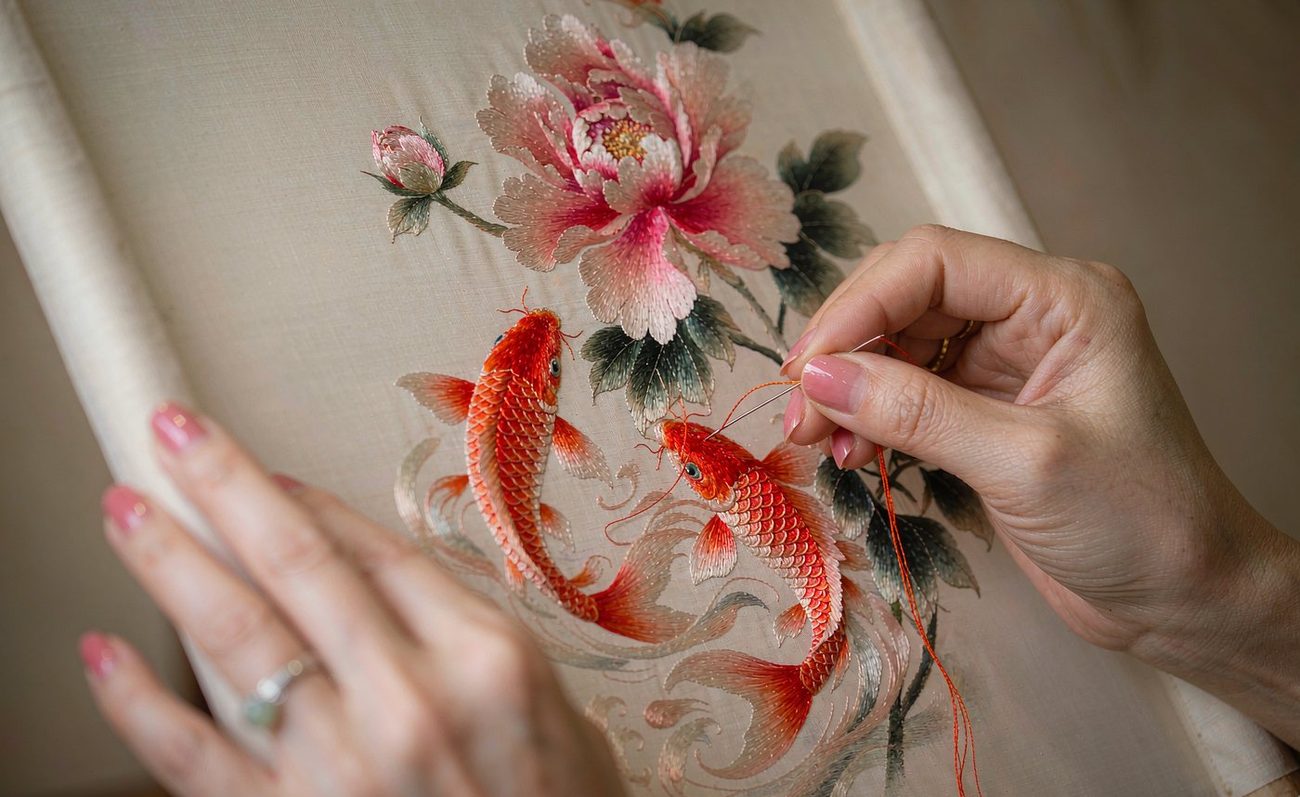
The needle as brush, thread as ink: ten thousand scenes embroidered on silk.
A single silk thread split sixty-four ways; a Suzhou master can embroider a cat's eye with the glint of life in it. Su, Xiang, Shu and Yue — four great schools and two thousand years of stitchcraft: magic that paints on satin.
The four great embroideries — Su, Xiang, Shu and Yue — weaving Eastern visions in silk thread.